Introduction
Most homes across the Los Angeles area weren't built with solar in mind. In fact, according to U.S. Census ACS data, nearly 70% of Los Angeles County's 3.7 million housing units were built before 1980 — long before modern electrical standards, solar-ready roofing, or energy codes existed.
If you own one of these homes, you've probably done the math on solar. California's electricity rates are among the highest in the country, the sun is abundant, and the federal tax credit is sitting at 30%. But the doubts are real: will your old roof hold up? Is your electrical panel even compatible?
Those are the right questions to ask. Solar on an older home involves three interconnected challenges: roof condition, electrical systems, and structural readiness. Skipping any one of them leads to expensive problems mid-project.
Solar is absolutely achievable on older homes. It just requires honest assessment before a single panel goes up — and the right contractor who handles roofing, electrical prep, and installation under one roof.
Key Takeaways
- Nearly 70% of LA County homes were built before 1980, so these challenges affect the majority of local homeowners considering solar
- The three core challenges are roof condition, outdated electrical systems, and local permitting/HOA requirements
- Bundling roof replacement with solar installation saves money and avoids costly panel removal later
- The federal Investment Tax Credit covers 30% of system cost, regardless of home age
- A pre-installation assessment from a qualified contractor catches potential cost issues before work begins
Why Solar Installation Is More Complex for Older Homes
Homes built before 1980 were designed under building codes, electrical standards, and roofing practices that simply didn't account for solar. The wiring wasn't sized for it. The panels (electrical, not photovoltaic) weren't built to handle it. And the roof framing wasn't engineered with the expectation of decades of additional load.
The gap between what these homes were built for and what solar requires is what makes older-home projects more involved than newer construction.
There's also a lifespan alignment problem worth understanding upfront. Solar panels now last 25 to 35 years according to the U.S. Department of Energy. If your roof is already aging, it may need replacement midway through your system's life. That scenario means paying to have panels removed, the roof replaced, and panels reinstalled — a cost entirely avoidable with proper planning upfront.
The Stakes Are Higher, and So Is the Opportunity
Older Southern California homes actually have more to gain from going solar than newer ones do.
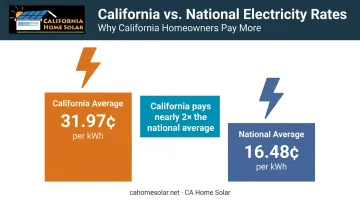
EIA data shows California's average residential electricity rate at 31.97 cents/kWh — nearly double the national average of 16.48 cents/kWh. Every kilowatt-hour your panels produce is a kilowatt-hour you're not paying for at that rate. For homeowners who navigate the challenges correctly, the math tends to work strongly in your favor.
Key Challenges When Installing Solar on an Older Home
Roof Age, Condition, and Structural Load
Solar panels are relatively light — roughly 2 to 4 pounds per square foot based on Sandia National Laboratories structural data. But that load still matters when the roof framing and decking beneath it are decades old, potentially weakened by moisture, deferred maintenance, or simply age.
A structural load assessment is essential before installation. What you're looking for:
- Framing integrity — are rafters and joists sound, or showing rot or insect damage?
- Decking condition — is the sheathing solid underfoot, or soft and spongy in areas?
- Overall code compliance — does the structure meet current load requirements?
On timing: the DOE recommends that homeowners replace their roof and add solar at the same time to avoid the cost of removing and reinstalling panels later. As a practical rule, if your roof has less than 10 years of useful life remaining, replacing it before or alongside solar installation is almost always the smarter financial decision.
Visible warning signs your roof may not be ready for solar:
- Curling, cracking, or missing shingles
- Granule loss (bare patches on asphalt)
- Sagging rooflines or soft areas underfoot
- Cracked or deteriorated flashing
- Water stains or daylight visible in the attic
Solar panels can hide these problems once installed — turning a straightforward roofing fix into a costly panel removal and reinstall job.
Roofing material lifespans (from InterNACHI):
| Material | Expected Lifespan |
|---|---|
| 3-tab asphalt shingles | ~20 years |
| Architectural asphalt shingles | ~30 years |
| Metal roofing | 40–80 years |
| Wood shake | ~25 years |
| Clay or concrete tile | 100+ years |
| Slate | 60–150 years |
Outdated Electrical Systems
Most pre-1980s California homes were built with 60- or 100-amp electrical service panels. Modern homes typically run on 150- or 200-amp service, and that gap matters: an undersized panel can limit what a solar system can do — or block installation entirely.
Beyond panel capacity, older homes can present additional wiring concerns:
- Aluminum branch-circuit wiring — the CPSC reports that homes built before 1972 with aluminum wiring are 55 times more likely to have connections reach fire hazard conditions than copper-wired homes
- Knob-and-tube wiring — common in pre-1950s construction, typically ungrounded and incompatible with modern solar interconnection
- Federal Pacific (Stab-Lok) or Zinsco panels — both are flagged by inspection professionals as safety hazards; Zinsco breakers have shown failure-to-trip rates of approximately 25% under overcurrent conditions
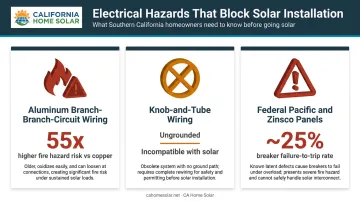
These aren't permitting technicalities — they're genuine safety issues. Identifying them before installation begins is far less expensive than discovering them mid-project; panel upgrades alone typically run $2,000–$5,000, and rewiring costs more.
Local Restrictions, HOAs, and Permitting
California law protects your right to install solar. California Civil Code Section 714 makes HOA restrictions that effectively prohibit solar void and unenforceable. Reasonable restrictions cannot increase your system cost by more than $1,000 or reduce efficiency by more than 10%.
State law sets the floor, but local rules in older LA neighborhoods can still add layers of process:
- HOA oversight may still require design review and written approval
- Historic Preservation Overlay Zones (HPOZs) require design review through LA City Planning
- Fire code compliance applies specifically to roof-mounted PV systems in LA County — systems permitted after January 1, 2015 must carry a fire classification of Class C or better
All solar installations require permits. Older homes frequently trigger additional scrutiny, particularly when roof, electrical, or structural work surfaces related code issues during inspection.
Solutions: How to Make Solar Work on Your Older Home
Start with a Comprehensive Professional Assessment
A proper pre-installation site assessment covers:
- Roof condition — material, age, visible damage, and estimated remaining life
- Structural load capacity — framing strength relative to panel weight and local code requirements
- Shading and orientation — tree canopy, neighboring structures, and roof angle
- Electrical panel status — service capacity, wiring type, and grounding condition
- Permitting and HOA requirements — local codes, HPOZ status, and utility interconnection rules
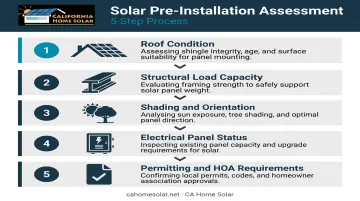
Skipping any of these leads to cost overruns or project delays. The goal is a complete picture before any work begins.
Contractors with combined experience in solar and home improvement — like California Home Solar, which has 36 years serving Southern California homeowners — handle this as a single coordinated evaluation. That eliminates the need to hire separate specialists for roofing, structural, and electrical reviews, then coordinate their findings yourself. That eliminates the need to hire separate specialists for roofing, structural, and electrical reviews, then coordinate their findings yourself.
When that assessment reveals a roof nearing end of life, the next step is clear.
Bundle Roof Replacement with Solar Installation
If your roof needs replacement within the next several years, doing it simultaneously with solar installation is typically the right financial call.
Why bundling works:
- Eliminates future panel removal and reinstallation costs
- Aligns roof and solar system lifespans
- Combines permitting into a single process
- Results in a cleaner installation on fresh materials, with a single point of warranty coordination
California Home Solar's comprehensive service offering — covering roofing, solar, and energy upgrades — makes this coordination straightforward for Southern California homeowners. One contractor, one timeline, one project manager who stays in contact at every stage.
Address Electrical Upgrades Strategically
An electrical panel upgrade isn't just a solar prerequisite. Think of it as a home improvement investment that happens to enable solar:
- Adds capacity for EV chargers and modern HVAC systems
- Improves overall home safety by replacing aging or hazardous equipment
- Can increase resale value and insurability
California Home Solar works with PACE-based financing programs — including California First — that allow qualified homeowners to finance solar, roofing, HVAC, and electrical upgrades through their property taxes with no large upfront payment. This directly addresses the higher project cost profile that older homes typically carry.
Note: The HERO program itself is currently listed as inactive by the California State Treasurer's Office. Confirm current PACE program availability with California Home Solar at the time of your consultation.
Explore Alternatives If the Roof Is Not Viable
If a roof is genuinely unsuitable — due to material type, severe structural compromise, or fire code restrictions — ground-mount solar is a practical alternative for properties with adequate yard space.
Ground-mount systems offer:
- Greater flexibility in panel angle and orientation
- Equivalent or greater energy output compared to a suboptimal rooftop
- No roof penetrations or load concerns
- Easier access for maintenance and cleaning
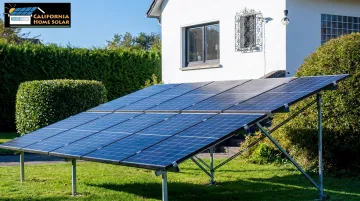
California Home Solar installs residential ground-mount systems and evaluates available space, sun exposure, energy needs, and local code compliance as part of the site assessment process.
Which Roof Types Are Compatible with Solar?
Most roofs in Southern California work fine with solar — but material and condition both matter.
Compatible materials:
- Asphalt shingles: The most straightforward option. Lag bolts with flashings are a standard, well-understood installation method.
- Metal (standing seam): Excellent for solar. Seam clamps attach without penetrating the roof membrane at all.
- Clay or concrete tile: workable, but needs specialist care — installers use tile hooks or replacement flashing methods to avoid cracking
Problematic materials:
- Slate: Extremely brittle with a high breakage risk during installation. Repairs are costly, and most installers won't touch it.
- Wood shake: Fragile and a fire code problem. The LAFD explicitly excludes wood shakes and shingles from approved roofing materials due to fire spread risk. Replace more than 10% of the roof area within 12 months, and the entire roof must be upgraded to fire-retardant materials.
What roofs can you not put solar panels on? Slate, wood shake, and severely compromised roofs of any material type are generally incompatible with rooftop solar. Material type is only one factor — condition matters equally. For homes with these materials, ground-mount systems are the most practical path forward.
Costs, Incentives, and Financing
What Older Homes Typically Cost More
Installing solar on an older home costs more than on newer construction when roof replacement, electrical upgrades, or structural work is required. These are largely one-time costs — and most of them improve the home's overall value independent of solar.
The main cost drivers for older homes include:
- Roof replacement or partial repair
- Electrical panel upgrade or wiring remediation
- Structural modifications if framing falls short of load requirements
- Extended permitting review for HPOZs or complex HOA processes
Key Financial Incentives
Federal Investment Tax Credit (ITC) The IRS Residential Clean Energy Credit equals 30% of qualified solar costs for systems installed from 2022 through 2032. Battery storage (minimum 3 kWh capacity) qualifies beginning in 2023. There is no restriction based on home age — older homes qualify on equal footing with new construction. The homeowner must own the system to claim the credit.
California Net Billing Tariff (NEM 3.0) For systems with interconnection applications submitted on or after April 15, 2023, California's Net Billing Tariff applies. Export compensation is based on the CPUC Avoided Cost Calculator — generally lower than retail import rates. This affects payback period compared to earlier NEM versions, so sizing your system thoughtfully for self-consumption matters more under NEM 3.0.
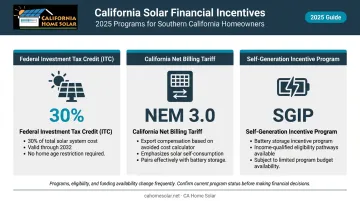
LADWP SGIP LADWP's Self-Generation Incentive Program helps qualified residential customers install solar and battery storage, with eligibility including single-family households at or below 80% of Area Median Income. Program budgets are limited, so confirm current availability before applying.
SCE SCE's SGIP ratepayer budgets are currently closed, with state-funded residential equity budgets exhausted and on a waitlist. SCE customers should verify current program status directly.
Financing Options
Once you've mapped out applicable incentives, financing is the next piece. California Home Solar works with PACE-based financing partners, so you can finance solar, roofing, HVAC, electrical upgrades, and windows through your property taxes — no money down, with repayment terms ranging from 5 to 25 years. All systems are sold outright (no leases or PPAs), which means you keep the full 30% ITC benefit.
Frequently Asked Questions
What roofs can you not put solar panels on?
Slate, wood shake, and severely damaged roofs of any material are generally not suitable for rooftop solar. In California, wood shake creates additional complications under local fire codes — particularly in Los Angeles, where wood roofing materials are excluded from approved materials by the LAFD. Ground-mount systems are the recommended alternative in these cases.
Should I replace my roof before installing solar panels?
If your roof has less than 10 years of useful life remaining or shows significant structural damage, replacing it before or alongside solar installation is the smarter financial choice. Bundling both projects avoids the cost of removing and reinstalling panels down the road, and aligns both systems under a single permitting process.
Can solar panels damage an old roof?
Properly installed panels on a sound roof should not cause damage. The problem arises when panels are installed on a compromised roof — existing leaks or soft decking become harder to detect and far more expensive to address once panels are in place. A thorough pre-installation inspection is what prevents this scenario.
How do I know if my electrical panel needs upgrading for solar?
Homes with 60- or 100-amp service panels, knob-and-tube wiring, or panels from discontinued brands like Federal Pacific (Stab-Lok) or Zinsco will almost certainly need an upgrade. Both FPE and Zinsco panels are flagged by inspection professionals as safety hazards. A licensed electrician or qualified solar contractor can confirm during a site assessment.
Does installing solar on an older home still qualify for the federal tax credit?
Yes — the IRS Residential Clean Energy Credit applies regardless of home age, provided you own the system. The credit covers 30% of qualified costs through 2032, and battery storage with at least 3 kWh capacity may also qualify. Confirm current eligibility with a tax professional before filing.
How much more does it cost to install solar on an older home?
The premium depends on which upgrades are needed — roof, electrical, and structural work each add to the total. PACE financing programs can spread those costs over time with no upfront payment. With California electricity rates near 32 cents/kWh, the long-term savings typically justify the added investment.