For homeowners across LA County, Pasadena, and the Valley, windows are often the biggest unaddressed source of cooling loss — the U.S. Department of Energy estimates that heat gain and loss through windows account for 25–30% of residential heating and cooling energy use. That's a substantial load your AC is fighting every summer.
But energy-efficient windows aren't cheap. Before you commit to replacing every window in your home, you need honest answers: How much will this cost? How much will you actually save? And does the math make sense for Southern California specifically?
This guide covers all of it — cost ranges, real savings expectations, SoCal-specific window specs, and what professional installation actually looks like.
TL;DR: Key Takeaways
- Windows typically cost $300–$900+ each, plus $100–$400 per window for professional installation
- ENERGY STAR-certified windows can cut household energy bills by up to 13%, saving roughly $125–$465 per year
- In Southern California, SHGC (Solar Heat Gain Coefficient) matters more than U-factor : target SHGC ≤ 0.25
- The federal 30% tax credit (up to $600) applied to qualifying windows placed in service through December 31, 2025 (verify current availability with your tax professional)
- Single-pane windows or frames older than 20 years typically see the fastest payback on new installs
What Makes a Window Energy-Efficient?
Energy-efficient windows combine several technologies that work together to control heat transfer. Understanding each component helps explain both the performance ratings and the price differences you'll encounter.
Panes, Coatings, and Gas Fills
- Double- or triple-pane glass — multiple panes create insulating air gaps that slow heat transfer
- Low-E coatings — microscopic metallic oxide layers reflect infrared heat and block UV rays while still letting natural light through
- Argon or krypton gas fills — denser than air, these inert gases slow thermal transfer between panes more effectively than an air gap alone
According to the DOE, windows manufactured with Low-E coatings typically cost about 10–15% more than standard windows but can reduce energy loss by up to 30%.
Frame Materials Matter Too
Frame choice affects both performance ratings and total price. Here's how the main options compare:
| Frame Material | Energy Efficiency | Approx. Cost Range | Notes |
|---|---|---|---|
| Vinyl | Good | $100–$900 | Best cost-efficiency balance for most homeowners |
| Fiberglass | Excellent | $500–$1,500 | Most durable; highest upfront cost |
| Wood | Moderate | $150–$1,950 | Attractive but requires ongoing maintenance |
| Aluminum | Poor | Varies | Not recommended; poor thermal performance |
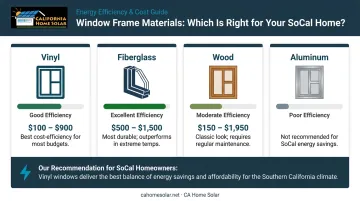
For most Southern California homeowners, vinyl frames offer the most practical balance — solid insulation, minimal upkeep, and a cost range that works for most budgets.
How Much Do Energy-Efficient Windows Cost?
The honest answer: it varies a lot. National averages range from $280 per window (2024 Bob Vila data) to $750–$800 per window (Angi and Forbes 2025–2026 estimates), with the difference driven by frame material, glass type, style, and local labor rates. In Southern California, expect prices toward the higher end of national ranges.
Cost by Glass Type
| Glass Type | Installed Cost Range | Average |
|---|---|---|
| Double-pane | $300–$2,100 | ~$1,000 |
| Triple-pane | $300–$3,800 | ~$1,950 |
The triple-pane premium runs roughly $950 more per window compared to double-pane. For SoCal homes, triple-pane rarely pays off on cooling savings alone — it earns its keep for noise reduction or premium builds, not as a climate-efficiency upgrade.
Cost by Window Style
Glass type is only one cost driver. Window style adds another layer: casement and picture windows seal more tightly than double-hung options and tend to deliver the best thermal performance per dollar:
| Window Style | Approx. Cost Range |
|---|---|
| Double-hung | $150–$650 |
| Casement | $150–$1,000 |
| Picture | $65–$1,000 |
| Sliding | $150–$1,200 |
| Bay/Bow | $2,000–$7,100+ |
Add-Ons That Affect Price
A few upgrades increase upfront cost but pay off in Southern California's climate:
- Low-E coatings — often standard on modern energy-efficient lines, but sometimes a separate add-on; they block solar heat gain and UV radiation, which matters in west- and south-facing rooms
- Gas fills — argon is the standard; krypton performs better but costs more
- Custom sizing — non-standard openings add to both material and labor costs
For a full home with 15–20 windows, expect a whole-project range of $5,000–$20,000+ depending on frame material, style, glass type, and local labor rates.
How Much Can You Save?
According to ENERGY STAR, replacing single-pane windows with ENERGY STAR-certified alternatives can lower household energy bills by up to 13%, with estimated annual savings of $125–$465 depending on home size, climate, and current window condition.
What Drives Your Savings
Four factors determine how much you'll actually save:
- Current window type — upgrading from single-pane produces the biggest savings; replacing functional double-pane windows delivers much less
- Home size and window count — more windows, more impact
- Climate and orientation — west- and south-facing windows in SoCal get hammered by afternoon sun; low-SHGC glass on those exposures matters most
- Overall home envelope — windows can't compensate for poor attic insulation or significant air leaks
Understanding Payback Period
With average savings of $200–$400 per year and whole-home installation costs running $5,000–$15,000, payback periods based on energy savings alone are long — often 15 years or more.
Windows aren't primarily a financial ROI play. The stronger case combines energy savings with comfort, reduced HVAC wear, lower UV fading on furniture and flooring, and increased resale value. For older homes with single-pane windows, those combined benefits make the investment straightforward.
Pairing window upgrades with attic insulation and air sealing stacks savings and shortens payback timelines. In Southern California, attic insulation alone often delivers faster ROI — tackling both together makes more sense than windows in isolation.
Are Energy-Efficient Windows Worth It in Southern California?
Southern California is a cooling-dominant climate, which changes the calculus significantly compared to colder regions.
The Key Metric: SHGC, Not U-Factor
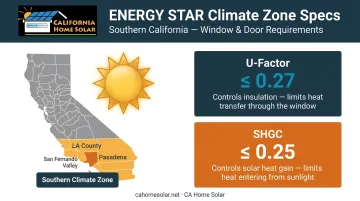
In Chicago, U-factor (insulation against cold) is the dominant spec. In Los Angeles, what matters is how much solar heat enters through the glass. That's measured by SHGC (Solar Heat Gain Coefficient).
ENERGY STAR places Los Angeles in the Southern climate zone, requiring U-factor ≤ 0.27 and SHGC ≤ 0.25 for certified windows. If you're shopping for windows in Pasadena, the Valley, or anywhere in LA County, that SHGC number is the spec to anchor on.
When Replacement Makes Clear Sense
Replacement is the right call when one or more of these apply:
- Single-pane windows — extremely common in pre-1980 homes throughout LA County and the San Fernando Valley, where the median City of LA dwelling was built in 1960
- Windows 20+ years old with degraded seals, visible condensation between panes, or drafts you can feel
- Physical damage: wood rot, cracked frames, or inoperable locks
- Planned upgrades to solar or HVAC — combining systems amplifies the return on each individual improvement
When to Hold Off
If your windows are relatively new and in good condition, replacing them won't deliver meaningful returns. In that case, air sealing and weatherstripping around existing frames is a lower-cost, higher-ROI fix. Attic insulation is another upgrade that often delivers faster payback for SoCal homes than window replacement alone.
Figuring out which upgrade delivers the best return for your specific home takes more than a general rule. CA Home Solar has served Southern California homeowners for 36 years, covering LA County, the San Fernando Valley, and Pasadena. As a full-service contractor handling windows, solar, HVAC, and roofing, they can assess your home's actual efficiency gaps and recommend where your upgrade dollars go furthest.
Energy-Efficient Window Installation: What to Expect
A quick note on DIY: experienced DIYers can handle straightforward window replacements, but professional installation is worth the cost. Improper installation — gaps in air sealing, incorrect shimming, or inadequate flashing — can eliminate most of the energy benefits and void manufacturer warranties.
In Southern California's climate, that also means heat pouring in during summer and moisture damage risk year-round. Getting the installation right matters as much as choosing the right window.
The Professional Installation Process
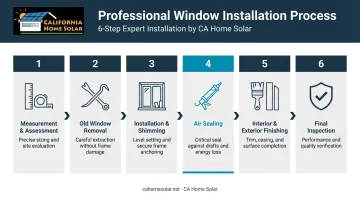
Here's what a typical professional window installation involves, so you know what to expect:
- Measurement and assessment: the installer measures the existing opening and evaluates frame condition before ordering
- Old window removal: careful extraction to avoid damaging the surrounding wall; rough opening inspected for rot, damage, or code issues
- Installation and shimming: new window unit set into the opening, shimmed level and plumb, fastened per manufacturer specs
- Air sealing: foam and appropriate sealants applied around the full perimeter — this step is critical and often where DIY installations fall short
- Interior and exterior finishing: caulking, trim work, and flashing to weatherproof the installation
- Final inspection: check for drafts, test operation, confirm the window opens, closes, and locks correctly
A single window typically takes a professional 30–60 minutes to install. A full-home replacement of 15–20 windows generally runs one to several days.
Before your crew arrives:
- Clear furniture and window treatments from the work area
- Ensure the installer has unobstructed access from both inside and out
- Confirm any HOA or permit requirements in advance
Tax Credits and Financing Options for California Homeowners
Federal Tax Credit — Important Update
The Energy Efficient Home Improvement Credit allowed homeowners to claim 30% of qualifying window costs, up to $600 per year, for windows meeting ENERGY STAR Most Efficient certification. However, per IRS guidance, this credit applied to property placed in service through December 31, 2025 and is not currently available for purchases after that date.
If you completed a qualifying installation in 2025, the credit may still apply to your tax return. Consult a tax professional or check EnergyStar.gov for the latest eligibility information.
Other Financing Options
- Home equity loans / HELOCs — lower interest rates; good option for larger whole-home projects
- Personal loans — faster approval but typically higher rates
- Manufacturer or installer financing — terms vary; ask about options when collecting quotes
- Utility rebates — neither SCE nor SoCalGas currently lists a direct residential window rebate on their main pages, but programs change; check sce.com and socalgas.com for current offerings
HERO / PACE Financing
CA Home Solar is a HERO Registered Contractor, which means eligible California homeowners may be able to finance energy-efficient window upgrades through PACE financing programs. Here's how it works:
- No money down — financing covers 100% of the project cost
- Repaid through your property tax bill — added as a line item on your annual statement
- Flexible terms — repayment periods typically range from 5–25 years
- Approval based on home equity, not credit score
Those benefits come with one significant caveat: PACE financing creates a lien on your property, which can complicate refinancing or a future sale. It's a cash-flow tool, not a cost reduction — read the terms carefully before committing. Contact CA Home Solar to review whether PACE financing makes sense for your project.
Frequently Asked Questions
How much does it cost to get energy-efficient windows installed?
Expect to pay $300–$900+ per window for materials, plus $100–$400 per window for professional labor. A whole-home project typically runs $5,000–$20,000+ depending on window count, style, frame material, and any custom sizing required.
What type of window is most energy-efficient?
Triple-pane fiberglass windows with Low-E coatings and argon/krypton gas fills offer the highest efficiency ratings. For most Southern California homeowners, double-pane vinyl windows with Low-E coatings and an SHGC ≤ 0.25 deliver the best balance of cost and performance.
Do energy-efficient windows really lower energy bills?
Yes, particularly for homes with single-pane windows. ENERGY STAR-certified windows can reduce household energy bills by up to 13%, though actual savings depend on home size, window orientation, and overall insulation quality.
How long does it take to recoup the cost of energy-efficient windows?
Based on energy savings alone, payback periods often run 15 years or more. Factor in improved comfort, reduced HVAC wear, lower UV damage, and better resale value, and the investment makes practical sense for homeowners planning to stay long-term.
Are energy-efficient windows worth it in Southern California's climate?
Yes, especially for homes with single-pane or older windows. The critical spec is a low SHGC rating (≤ 0.25) to limit solar heat gain — that's what drives cooling costs in the LA area's climate, and what separates a well-chosen window from a poorly chosen one.
What is the federal tax credit for energy-efficient windows?
Through December 31, 2025, qualifying windows can earn a 30% federal tax credit on costs, up to $600 per year. Availability beyond that date is unconfirmed — verify current requirements at EnergyStar.gov or with your tax professional before factoring the credit into your budget.