This article breaks down what energy-efficient windows actually cost in the Southern California market, how much you can realistically save on energy bills, what the federal tax credit covers, and how the full ROI picture looks when you factor in resale value and available financing.
Key Takeaways
- Energy-efficient windows typically cost $400–$900 per window installed for mid-range vinyl or fiberglass ENERGY STAR units
- DOE research estimates replacing single-pane windows saves $125–$465 per year — a figure that stretches further with SCE's 34.5 cents/kWh residential rate
- The federal Energy Efficient Home Improvement Credit covers 30% of window costs, capped at $600/year for qualifying products
- The 2025 Cost vs. Value report shows vinyl window replacement recouping 76% of project cost at resale
- Qualifying homeowners can finance upgrades through PACE programs like HERO — no money down, repaid through the property tax bill
What Makes a Window "Energy-Efficient"?
Not all windows labeled "energy-efficient" perform equally. Three core technologies separate a genuinely high-performing window from a basic replacement unit.
The Core Technologies
- Multiple panes with inert gas fill: double-pane windows with argon or krypton gas between panes dramatically reduce heat transfer compared to single-pane construction
- Low-E (low-emissivity) coatings — a microscopically thin metallic layer applied to the glass surface that controls how much radiant heat passes through (available in hard-coat and soft-coat variants depending on climate application)
- Thermally broken frames: vinyl, fiberglass, and composite frames reduce conductive heat flow by design; aluminum frames without thermal breaks conduct heat readily and undermine the window's overall performance
These technologies only pay off if you select the right product for your climate — which is where performance ratings come in.
Key Performance Ratings
Two numbers matter most when you're comparing windows:
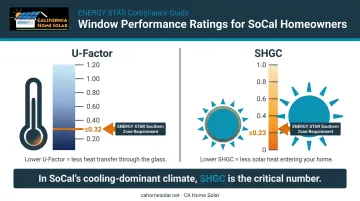
- U-factor — measures overall heat transfer rate; lower is better (NFRC scale runs 0.20–1.20)
- SHGC (Solar Heat Gain Coefficient) — measures the fraction of solar radiation that enters through the glass; lower means less solar heat admitted
For Southern California specifically, SHGC matters more than U-factor. This is a cooling-dominant climate — blocking solar heat gain in summer delivers far more savings than reducing winter heat loss.
Under ENERGY STAR Version 7.0, windows for the Southern climate zone must meet U-factor ≤ 0.32 and SHGC ≤ 0.23. ENERGY STAR certification is the most direct way to confirm a window meets minimum thresholds for your climate zone — use the ENERGY STAR ZIP code finder to check your specific address.
How Much Do Energy-Efficient Windows Cost in Southern California?
Benchmark Project Costs
The 2025 Cost vs. Value report from the Journal of Light Construction provides the most reliable national benchmark: a 10-window vinyl replacement project (3×5-foot double-hung windows with insulated Low-E units) runs approximately $22,073 in total installed cost, with a resale value of $16,657 and 76% of cost recouped.
For individual windows, mid-range ENERGY STAR vinyl or fiberglass units generally fall in the $400–$900 per window installed range. Costs vary based on:
- Window size and style (casement windows cost more than double-hung; picture windows vary by glass area)
- Frame material
- Number of panes
- Site conditions
A full-home replacement covering 12–18 windows — typical for a Southern California ranch or mid-century home — puts the total investment somewhere in the $10,000–$20,000+ range depending on scope and specifications.
LA-Area Cost Factors
Southern California adds specific cost pressures that push most projects above national averages:
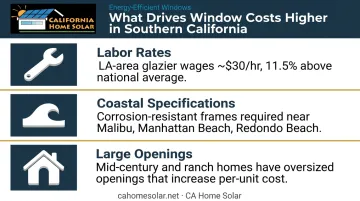
- Labor rates — BLS data shows glazier wages in the LA–Long Beach–Anaheim market averaging around $30.00/hour, roughly 11.5% above the national mean
- Coastal specifications — homes in Malibu, Manhattan Beach, Redondo Beach, and Hermosa Beach often require corrosion-resistant frame materials that add per-unit cost
- Large window openings — mid-century and California ranch homes frequently have oversized window openings that increase material and labor cost per unit
Frame Material and How It Affects Price
| Frame Material | Relative Cost | Best For |
|---|---|---|
| Vinyl | Most affordable | Most SoCal homes; low maintenance, good thermal performance |
| Fiberglass | Mid-to-high premium | Coastal areas, larger openings, higher durability |
| Wood-clad | Highest cost | Historic homes, premium aesthetics; requires more upkeep |
For most homes in the San Fernando Valley, San Gabriel Valley, or inland LA County, vinyl frames deliver strong performance at the lowest cost. Fiberglass makes more sense near the coast where humidity and salt air accelerate vinyl degradation.
How Much Can You Actually Save on Energy Bills?
Savings are real, but they're not going to pay for new windows in two years. The numbers below reflect what DOE and ENERGY STAR data actually show — and why Southern California homeowners tend to land on the higher end.
Savings Ranges from Single-Pane Replacement
The DOE's consumer guide puts annual savings from replacing single-pane windows with ENERGY STAR-certified models at $125–$465 per year, depending on home size, climate, and prior window condition. ENERGY STAR's current savings page shows a slightly wider range of $101–$583 per year based on location and assumptions.
Southern California homeowners should expect to land at or above the midpoint of these ranges. The reason: SCE's average residential rate is 34.5 cents/kWh — one of the highest in the country. Every kWh you stop paying for is worth more here than in a lower-rate state.
Why Solar Heat Gain Is the Dominant Factor
In DOE Climate Zone 3B (Hot-Dry, which covers Los Angeles County), cooling load dominates heating load. Windows with low SHGC coatings reduce the solar heat entering your home, which directly reduces how often and how hard the AC runs. This is the primary efficiency driver in SoCal — not insulating against cold winters.
Savings When Upgrading Older Double-Pane Units
Older double-pane windows with failed seals or degraded gas fills still present a real upgrade opportunity. The DOE estimates savings of $65–$190 per year when replacing older double-pane units with new ENERGY STAR windows — less dramatic than single-pane replacement, but still a worthwhile upgrade for windows 15–20 years old or more.
Cumulative Savings Over Time
Using a conservative midpoint of $200/year in energy savings for a typical LA-area home upgrading from single-pane:
- 10 years: ~$2,000
- 15 years: ~$3,000
- 20 years: ~$4,000
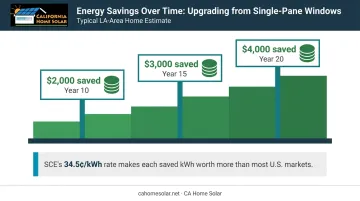
These figures don't account for the upfront cost — that's covered in the ROI section below. Savings compound steadily over time, and SCE's above-average rates make each saved kWh more valuable here than in most other states.
The Full ROI Picture: Home Value, Tax Credits, and Payback Period
Energy bill savings alone don't close the financial case for window replacement. The complete ROI picture includes resale value, available incentives, and the indirect benefits that matter to buyers.
Home Value Impact at Resale
The 2025 Cost vs. Value report puts vinyl window replacement at 76% cost recouped at resale nationally. In practice, that means a $15,000 window project adds roughly $11,400 to the home's market value.
Beyond the appraised value gain, new windows protect sellers in two other ways:
- Homes with single-pane or visibly failing windows often face inspector-flagged repair demands that reduce net proceeds
- Energy-upgraded homes tend to attract stronger offers from buyers who want move-in-ready properties and lower operating costs
Federal Tax Credits
The federal Energy Efficient Home Improvement Credit (IRA Section 25C) covers 30% of qualifying window costs, capped at $600 per year for exterior windows and skylights. To qualify, windows must meet ENERGY STAR Most Efficient criteria, which is stricter than standard ENERGY STAR certification. Confirm product specifications meet the required U-factor and SHGC thresholds before assuming eligibility. The credit is currently available for improvements made through December 31, 2025.
Applied to a $15,000 project, the $600 credit reduces out-of-pocket cost to $14,400 before any utility rebates.
California and Local Incentives
- LADWP lists ENERGY STAR Qualified Windows as qualifying products under its Consumer Rebate Program — check current rebate amounts on the LADWP rebate portal, as figures change annually
- PACE financing — California is one of three states where residential PACE financing is currently active. CA Home Solar is a HERO Registered Contractor, meaning homeowners can finance qualifying window upgrades through their property tax assessment with no money down, no application fees, and terms from 5–25 years. HERO financing does not affect your eligibility for utility rebates or federal tax credits
Payback Period: Setting Realistic Expectations
Using a $15,000 project with the $600 federal credit applied ($14,400 net), and annual energy savings of $200–$400:
- Energy-only payback: roughly 36–72 years at those savings rates
- Combined payback (energy savings + resale value recoup): If the project adds ~$11,000 in resale value immediately, the residual cost is ~$3,400, which paybacks in 8–17 years through ongoing utility savings
For homeowners planning to stay 7+ years, that combined payback math holds up well. Those selling within 1–2 years get better dollar-for-dollar return by targeting the most visibly deficient or inspector-flagged windows rather than full replacement. The numbers beyond energy savings — resale value and comfort — are what make the investment work.
Indirect Value That Doesn't Appear in Spreadsheets
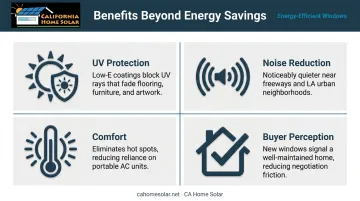
Those non-energy gains are worth naming specifically:
- UV protection — Low-E coatings block UV radiation that fades flooring, furniture, and artwork
- Noise reduction — noticeable in LA urban neighborhoods, near freeways, or in areas like Hollywood or downtown adjacent communities
- Comfort — eliminating hot spots near windows reduces reliance on portable AC units
- Buyer perception — new windows signal a well-maintained home, reducing negotiation friction
Is It Worth It for Southern California Homeowners?
The answer depends on your situation. Two profiles capture most homeowners:
Planning to Stay 7+ Years
The combination of energy savings, comfort improvements, resale value recoup, and available incentives (federal tax credit + PACE financing through HERO) makes a strong case, especially if you have original single-pane windows. CA Home Solar offers window installation as a standalone service or as part of bundled energy upgrades with solar or HVAC, which can compound savings and strengthen the home's overall energy profile.
Selling Within 1–2 Years
Prioritize the windows most likely to trigger inspector concerns or buyer objections. A targeted partial replacement recouped at 76% still adds net value — a full-home replacement may not pencil out in that timeframe.
Where the ROI Case Is Strongest in Southern California
- Homes built before 1990 with original single-pane windows — the largest efficiency gap and the highest potential savings
- Inland communities — San Fernando Valley, San Gabriel Valley, Antelope Valley — where summer heat is most intense and AC costs run highest
- Mid-century California homes with large window areas that admit substantial solar heat gain
California's Title 24 energy code sets prescriptive limits for replacement fenestration — generally around U-factor 0.30 and SHGC 0.23, with variations by climate zone and project scope.
An experienced contractor familiar with these requirements matters for both compliance and for ensuring the windows you're paying for qualify for available incentives.
Frequently Asked Questions
Do energy-efficient windows actually save homeowners money on energy bills?
Yes. The DOE estimates savings of $125–$465 per year when replacing single-pane windows with ENERGY STAR-certified models. In Southern California, where SCE's residential rates average 34.5 cents/kWh, every reduction in AC load translates to above-average dollar savings compared to lower-rate markets.
How much can homeowners claim on taxes for installing energy-efficient windows?
The federal Energy Efficient Home Improvement Credit covers 30% of qualifying window costs, capped at $600 per year for exterior windows and skylights. Windows must meet ENERGY STAR Most Efficient criteria — standard ENERGY STAR certification alone is not sufficient for the credit.
How much do energy-efficient windows add to home value?
The 2025 Cost vs. Value report shows vinyl window replacement recouping approximately 76% of project cost at resale nationally. New windows also reduce buyer price concessions at inspection, adding real value beyond the appraised gain.
Is 0.27 a good U-factor for energy-efficient windows?
A U-factor of 0.27 is a solid rating — it meets ENERGY STAR requirements for the Southern zone (≤ 0.32). For Southern California, though, SHGC is typically the more critical number. Look for SHGC ≤ 0.23 to meet ENERGY STAR Version 7.0 Southern-zone requirements.
How long does it take for energy-efficient windows to pay for themselves?
On energy savings alone, payback typically runs 7–12 years. Factor in the ~76% resale cost recoup and federal tax credits, and the effective break-even shortens considerably — especially when PACE financing programs like HERO eliminate the upfront cost entirely.
Are there California-specific rebates or financing programs for energy-efficient windows?
LADWP lists ENERGY STAR-qualified windows as eligible for its Consumer Rebate Program. California's PACE financing programs — including HERO, for which CA Home Solar is a registered contractor — allow homeowners to finance qualifying window upgrades through their property tax bill with no money down, keeping other financing capacity available.