Cool roofs address this by reflecting sunlight rather than absorbing it, keeping surface temperatures more than 50°F cooler under the same conditions. But costs vary widely — from a few hundred dollars for a basic coating to $30,000+ for a full premium material replacement — and most homeowners don't know which approach applies to their situation until they're already getting quotes.
This guide breaks down every cost tier, the factors that move the price, and how to set a realistic budget for your specific home.
Key Takeaways
- Cool roof installation costs range from roughly $1,500 for entry-level coatings to $30,000+ for full premium replacements on a standard residential roof
- The biggest cost driver is whether you need a coating-only retrofit or a full tear-off and material replacement
- Southern California's intense heat makes cool roofs one of the strongest ROI investments in the country, though LA-area labor costs run above the national average
- CRRC-rated materials (not ENERGY STAR, discontinued in 2022) are the current compliance benchmark under California's Title 24 code
- PACE financing programs like YGrene and California First can spread costs over time with no large upfront payment
How Much Does Cool Roof Installation Cost?
Cool roof costs split into two very different tracks: coating an existing roof versus replacing it entirely with cool-rated materials. Each path has its own price range, labor requirements, and ideal use case.
Cool Roof Coatings (Entry-Level)
Elastomeric or acrylic cool roof coatings are liquid-applied over an existing surface. According to Angi's 2026 roof coating cost data, acrylic coatings run $0.65–$1.75 per sq ft installed, with typical total projects ranging from $542 to $2,514 nationally.
For a 1,500–2,000 sq ft Southern California roof, expect roughly $975–$3,500 — and budget toward the higher end given LA-area labor rates.
- What's included: Surface preparation, roof cleaning ($300–$625), liquid coating application
- No tear-off required — the biggest cost advantage
- Best for: Structurally sound roofs that need a reflectance upgrade without a full replacement
If your roof needs more than a reflectance boost — or you're already due for replacement — cool-rated shingles and metal roofing open up the mid-range tier.
Reflective Shingles or Cool Metal Roofing (Mid-Range)
CRRC-rated asphalt shingles with infrared-reflective granules (such as CertainTeed's Landmark Solaris line) run approximately $6.67/sq ft installed, putting a 1,500 sq ft project with white solar-reflective architectural shingles around $10,000.
Cool metal roofing covers a broader range: $4–$30/sq ft, with most homeowners landing between $6,040 and $18,350 for a full project. Metal shingles (as opposed to standing-seam panels) run $7–$22/sq ft installed.
- Typical job scope: Tear-off, new underlayment, CRRC-rated material installation, basic flashing
- Best for: Homeowners due for a full replacement who want meaningful energy savings with a traditional aesthetic
For flat or low-slope roofs — common on commercial properties and some LA-area homes — membrane systems and premium tile round out the high-end range.
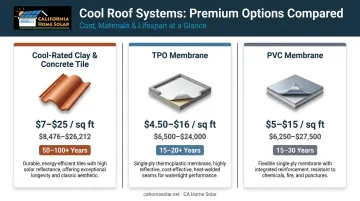
Tile, TPO/PVC Membranes, or Premium Systems (High-End)
| System | Installed Cost | Typical Total | Lifespan |
|---|---|---|---|
| Cool-rated clay/concrete tile | $7–$25/sq ft | $8,476–$26,212 | 50–100+ years |
| TPO membrane (low-slope) | $4.50–$16/sq ft | $6,500–$24,000 | 15–20+ years |
| PVC membrane (low-slope) | $5–$15/sq ft | $6,250–$27,500 | 15–30 years |
- Includes: Structural assessment, full tear-off, premium material installation, extended warranty coverage
- Best for: High-heat areas, flat or low-slope roofs, and homeowners planning to stay long-term who want maximum durability
Key Factors That Affect Cool Roof Installation Cost
Changing even one of these variables can shift a project cost by thousands of dollars.
Material Type and Reflectance Rating
CRRC-rated products are the benchmark to look for — they're the current compliance standard under California's Title 24, after ENERGY STAR roof product certification sunset on June 1, 2022. The DOE notes that cool roofing products typically cost no more than comparable conventional products.
That said, verified CRRC ratings, aged solar reflectance values, and Title 24 compliance can vary by product line even within the same brand. Always check the specific product's CRRC listing, not just the brand name.
Roof Size, Slope, and Complexity
A simple low-slope flat roof is the easiest and cheapest to work with. Steep-pitch roofs with multiple facets, dormers, or skylights add labor hours, increase material waste, and require more skilled installation.
- Flat/low-slope roofs qualify for coatings and single-ply membranes, the most affordable options overall
- Steep-slope roofs require shingles, tile, or metal, which carry higher material costs and more complex labor
- Complex geometry (valleys, dormers, skylight curbs) adds hours to any installation regardless of roof type
Coating vs. Full Tear-Off Replacement
A coating retrofit avoids tear-off costs entirely , typically several hundred to over a thousand dollars in labor and disposal fees. That makes coatings considerably cheaper upfront.
The calculation changes if your existing roof is near the end of its useful life. Applying a coating to a roof that needs replacement in three years means paying twice — once for the coating now, once for the full replacement shortly after.
Labor and Regional Market Rates
BLS May 2023 data shows roofer wages in the Los Angeles-Long Beach-Anaheim metro averaging $33.29/hr compared to $26.85/hr nationally. That premium flows directly into contractor bids.
For LA-area projects, expect labor to represent the largest single cost component on full replacements.
Permits and Title 24 Requirements
California's Title 24 energy code requires cool roof compliance when more than 50% of a roof's area is replaced. In Los Angeles, steep-slope roofs must meet a 3-year aged solar reflectance of at least 0.25 and thermal emittance of 0.85. Low-slope residential roofs in certain climate zones face stricter thresholds.
Permit costs in the LA area aren't published as a single flat fee . LADBS uses a valuation-based fee schedule, with national estimates for residential roofing permits running $100–$500. A licensed contractor handles the compliance documentation as part of the project.
Full Cool Roof Cost Breakdown: What You're Actually Paying For
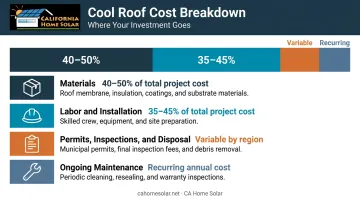
The quoted price rarely tells the whole story. Breaking it into components prevents budget surprises:
| Cost Component | Typical Share | Notes |
|---|---|---|
| Materials | 40–50% of total | Varies by material tier and sq footage |
| Labor & installation | 35–45% on full replacements | Includes prep, tear-off, underlayment, installation |
| Permits, inspections, disposal | Often overlooked | Add to project total; permits required for major reroofs |
| Ongoing maintenance | Recurring | Periodic cleaning to maintain reflectance performance |
Dirt and algae accumulation reduce a cool roof's solar reflectance over time — enough to affect energy performance noticeably. Budget for periodic low-pressure washing and annual visual inspections to keep your roof meeting Title 24 aged reflectance requirements.
Budget vs. Premium Cool Roofs: Is Spending More Worth It?
How long you plan to stay in the home is the single biggest factor in this decision.
Entry-level coatings and basic reflective shingles offer the lowest upfront cost. Coatings may require reapplication every 5–10 years, and moderate reflectance ratings mean moderate energy savings. They're a practical starting point for homeowners with tight budgets or shorter ownership timelines.
Premium systems — cool metal, tile, or single-ply membranes — cost substantially more upfront but deliver:
- Higher solar reflectance and thermal emittance values
- Lifespans of 40–100+ years for metal and tile
- Lower maintenance frequency
- Stronger long-term ROI in high-AC-use climates like Southern California
Research from LBNL found cooling energy savings of 10%–50% in California experiments with cool roofs, though actual results depend on attic insulation, duct location, AC efficiency, and local climate zone. For Los Angeles homeowners running air conditioning for much of the year, even a 10–15% reduction in cooling load can translate to hundreds of dollars saved annually — a figure that compounds significantly over a 10-to-20-year ownership window.
That ROI improves further when you factor in available incentives, which can meaningfully close the cost gap between entry-level and premium systems:
- LADWP's cool roof rebate of $0.20–$0.60/sq ft (LADWP service territory; verify eligibility)
- DSIRE database for additional utility and state incentive programs
- PACE financing programs that spread costs through your property tax bill
How to Estimate the Right Cool Roof Budget for Your Home
The right budget isn't the lowest one — it's the one that fits your home's condition, climate zone, and how long you plan to own it.
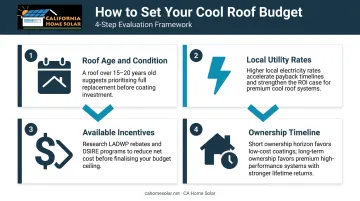
Before setting a number, evaluate these four factors:
- Current roof age and condition — A roof past 15–20 years typically warrants full replacement with cool materials rather than a coating retrofit
- Local utility rates — Higher rates mean faster payback on premium, high-reflectance systems
- Available incentives — Check LADWP's rebate program and the DSIRE database for current California programs; incentives can close the cost gap between tiers
- Ownership timeline — A two-year horizon favors coatings; a 20-year horizon favors durable premium systems
Once you've worked through those factors, financing and incentives can shift what's actually affordable. CA Home Solar is a licensed, bonded contractor with 36 years serving Los Angeles-area homeowners — and as a HERO Registered Contractor, the company helps clients access PACE financing programs that make premium systems more accessible.
PACE options CA Home Solar works with include:
- California First and YGrene Energy Fund — two of the most widely used PACE programs in California
- Zero down payment with repayment terms from 5–25 years
- Property tax bill billing — no lump-sum payment required
Importantly, PACE financing doesn't affect your eligibility for utility rebates. That means you can stack a LADWP cool roof rebate with PACE financing and bring a premium system within reach of an entry-level budget.
For a free consultation and project estimate, contact CA Home Solar at 877-903-1012 or info@cahomesolar.com.
Frequently Asked Questions
How much does cool roof installation cost for a 2,000 sq ft roof?
Expect roughly $1,300–$3,500 for an acrylic coating, $10,000–$15,000 for reflective shingles or basic metal, and $16,000–$30,000+ for tile or premium single-ply systems. Southern California labor rates run above the national average, so local bids will typically land at the higher end of published ranges.
What is the difference between a cool roof coating and a cool roof replacement?
A coating is a liquid applied over an existing, structurally sound roof — no tear-off required and significantly lower cost. A replacement removes old material and installs new CRRC-rated products. The right choice depends primarily on your existing roof's age and condition.
Does California require cool roofs?
Yes. California's Title 24 energy code requires cool roof compliance when more than 50% of a residential roof area is replaced. Los Angeles has specific aged solar reflectance and thermal emittance thresholds by roof slope — your contractor handles the compliance documentation.
Are there rebates or financing options for cool roofs in California?
LADWP offers a cool roof rebate of $0.20–$0.60/sq ft for qualifying installations in their service territory. The DSIRE database lists additional California programs. PACE financing through programs like YGrene and California First allows homeowners to finance the project through their property tax bill with no upfront payment.
Is a cool roof worth the cost in Southern California?
For most Southern California homeowners with high cooling loads, yes. LBNL research found 10%–50% cooling energy savings in California experiments. The savings are most compelling when a roof replacement is already due and you qualify for LADWP rebates or PACE financing.
How long does it take to recoup the cost of a cool roof?
Most Southern California homeowners with significant AC usage see payback in roughly 5–10 years, faster with LADWP rebates and PACE financing. Payback shortens considerably when the cool roof replaces an end-of-life conventional roof you would have replaced anyway — the incremental cost is much smaller than a full standalone upgrade.