Here's the reality: the mounting system beneath your panels determines whether your installation lasts 30 years or creates headaches in year three. Get it wrong and you're looking at roof leaks, reduced energy output, permit rejections, or an expensive teardown when your roof needs replacing. Get it right and it quietly does its job for the life of the system.
This guide covers every major mounting type, the factors that determine which one fits your home, and what Southern California homeowners in particular need to know before making this decision.
Key Takeaways
- Solar mounting systems anchor panels to your roof or property and carry all structural loads (wind, snow, gravity) across a 25–30 year lifespan.
- The two primary categories are roof-mounted (fixed, ballasted, adjustable) and ground-mounted (fixed or tracking).
- Roof type, orientation, shading, available space, energy goals, and local codes all determine which system fits.
- For most LA-area homeowners with a south- or west-facing roof in good condition, a fixed rail-based roof mount offers the best cost-to-performance ratio.
- A professional on-site assessment is the only reliable way to confirm the right choice for your specific property.
What Is a Solar Panel Mounting System?
A solar panel mounting system is the structural framework — rails, attachments, and clamps — that anchors PV panels to a surface and transfers all physical loads safely into the roof or ground. It's engineered to last as long as the panels themselves, typically 25–30 years, and must meet UL 2703, the industry standard covering mounting systems, clamping devices, and ground lugs for flat-plate photovoltaic modules.
The mounting system affects more than just panel security. Tilt angle influences energy output. Roof attachment quality determines leak risk. The system's overall design must also comply with local fire clearance and setback requirements before a permit will be issued.
Core Components
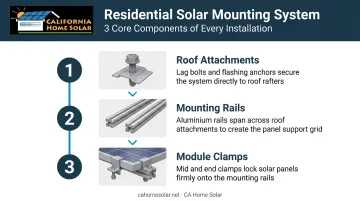
Every residential mounting system has three main parts:
- Roof attachments — fasteners drilled into rafters or secured to roof seams, surrounded by flashing to prevent water infiltration. Proper flashing is non-negotiable per IRC Chapter 9 requirements — this is the component most directly tied to leak risk.
- Mounting rails — aluminum or steel rails that distribute panel weight across multiple attachment points and hold panels at the correct tilt angle. IronRidge's XR rails, for example, use a curved profile to increase structural strength and spanning capability (the distance between attachment points).
- Module clamps — hardware that locks panels onto the rails. End clamps secure the perimeter; mid clamps sit between panels. Placing clamps outside a panel manufacturer's approved zones can void the panel warranty — worth confirming with your installer before sign-off.
Leading racking manufacturers — IronRidge, Unirac, EcoFasten, and Schletter — each back their systems with 25-year warranties, a strong signal that correctly installed hardware is built to run the full life of your panels.
Types of Solar Panel Mounting Systems
Roof-Mounted Systems
Roof mounts are the most common residential choice. Three configurations cover the majority of homes:
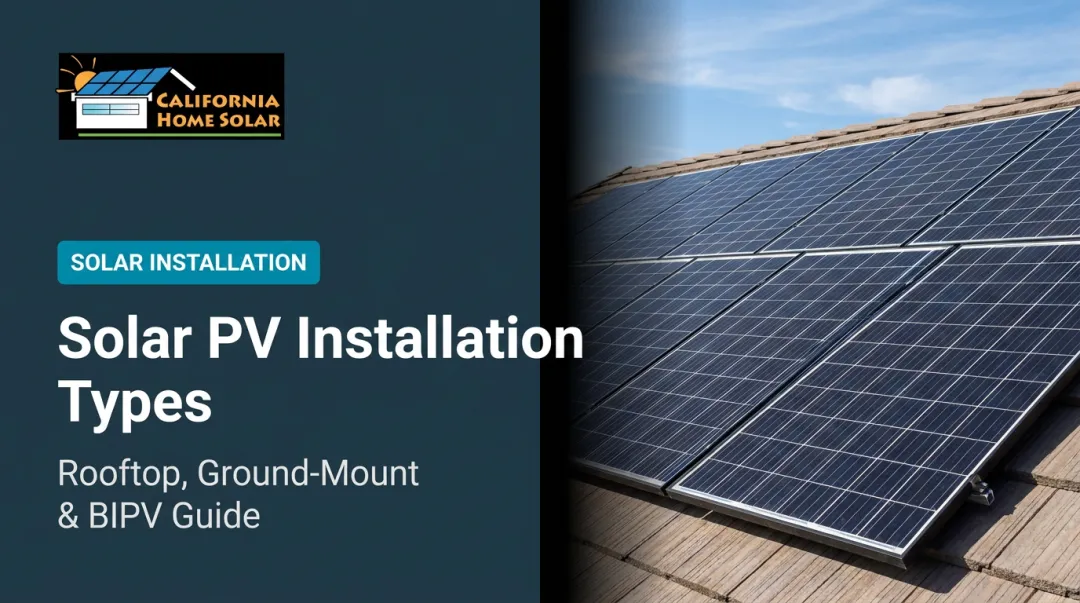
- Fixed mounts secure panels at a set angle matching the roof slope or local latitude. Lower cost, straightforward installation, and fully adequate for most Southern California homes with south- or west-facing roofs. Unirac's SOLARMOUNT is a widely used rail-based example.
- Ballasted flat-roof mounts hold arrays on low-slope and flat roofs using weighted bases — no roof penetrations required. IronRidge's BX Ballast System, for instance, offers 5-degree and 10-degree tilt options, reducing leak risk on membrane roofs.
- Adjustable mounts allow seasonal tilt changes to maximize output year-round. Research shows monthly optimal tilt can increase energy production by roughly 5.82% compared to a fixed angle — a modest but real gain for homeowners prioritizing maximum generation.
Ground-Mounted Systems
Ground mounts become the better option when the roof isn't workable — north-facing, heavily shaded, or structurally unsuitable.
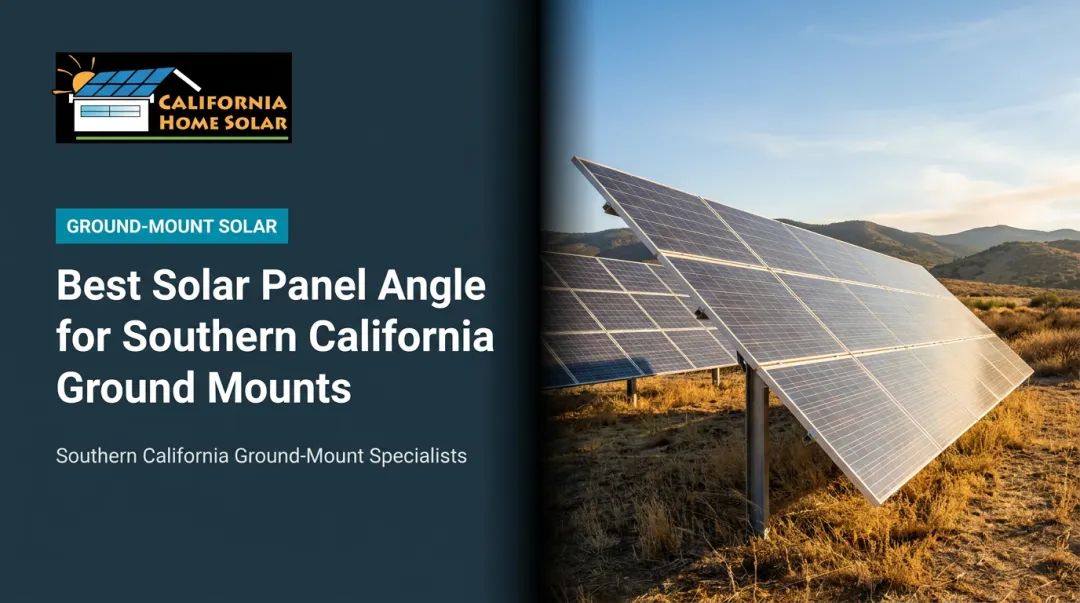
Fixed ground mounts use driven posts or concrete footings to hold panels at a predetermined angle. Because you're not constrained by existing roof slope or orientation, you can position the array for optimal sun exposure — and maintenance access is considerably easier than on a rooftop.
Solar tracking systems follow the sun's path through the day. According to NREL research, single-axis tracking provides a 15–25% energy gain relative to fixed-tilt ground mounts. That's a meaningful production increase, but the higher upfront cost and mechanical complexity make trackers uncommon in standard residential settings. For large properties where output maximization justifies the investment, they're worth a conversation.
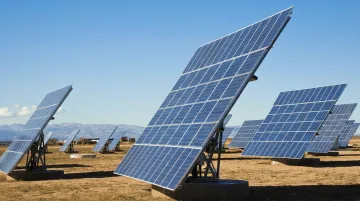
CA Home Solar installs ground-mount systems for both residential and commercial properties throughout Los Angeles County — particularly useful for homeowners with open land who can't get adequate production from their rooftop.
Key Factors to Choose the Right Mounting System
No single mounting type is universally correct. These factors narrow the field for your specific situation.
Roof Type and Condition
Roof type is the first filter:
- Asphalt shingle roofs accept standard flashed L-foot rail systems — the most straightforward and cost-effective installation
- Tile roofs (extremely common across Los Angeles and the San Gabriel Valley) require specialized tile hooks or replacement mounts and additional labor
- Standing seam metal roofs are excellent candidates: non-penetrating clamps attach directly to the seams without drilling
- Flat roofs call for ballasted or mechanically attached systems
Roof condition matters just as much as type. The DOE notes that combining roof replacement with solar installation saves an average of $4,000 compared to doing them separately. If your roof has fewer than 10 years of remaining life, installing panels now means paying to remove and reinstall the entire array when the roof fails.
CA Home Solar handles both roofing and solar installation directly, so there's no handoff between separate contractors. Their team assesses your roof's remaining life and coordinates replacement before panels go on, eliminating scheduling gaps and warranty complications from using two different vendors.
Roof Orientation and Shading
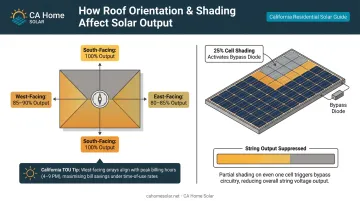
The DOE recommends unshaded, south-facing roofs with a pitch between 15 and 40 degrees for maximum solar production. Any orientation between southeast and southwest can work.
West-facing roofs deserve specific attention in California. Under the state's time-of-use billing structure, peak electricity rates run from 4 PM to 9 PM, exactly when west-facing panels capture their strongest afternoon sun. West-facing arrays may actually outperform south-facing ones in terms of bill reduction under California's TOU rates.
Orientation determines how much sun your panels can access; shading determines how much of that potential they actually deliver. NREL data shows that even modest shading (as little as 25% opacity on a single cell) can trigger a bypass diode and suppress output across an entire string. If trees, chimneys, or neighboring structures shade your best roof slopes, a ground mount placed in full sun often closes that production gap more effectively than any electronics fix.
Space, Budget, and Energy Goals
Available space shapes your options before budget enters the picture:
- Roof mounts are constrained by usable area after setbacks, vents, and structural limitations
- Ground mounts need open land clear of shading and within property line setback requirements
- Homeowners with limited roof space but a usable yard can support a larger array on the ground
LBNL's Tracking the Sun 2024 report puts the California median residential solar installed price at approximately $4.10 per watt before incentives. On a typical 8 kW system, that's around $32,800 before the 30% federal Investment Tax Credit. Ground mounts and tracking systems carry higher upfront costs due to site preparation, post installation, and engineering, but higher production may offset that premium across the system's lifespan.
If you're adding EV charging or battery storage, have a licensed installer model expected production under each mounting scenario against your actual utility bills before committing. The math changes significantly once you account for future load growth.
Local Codes and HOA Rules
Los Angeles-area installations face several regulatory layers worth knowing:
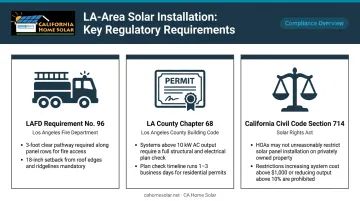
- LAFD Requirement No. 96 requires 3-foot-wide clear access pathways from load-bearing walls to the ridge, panels no closer than 18 inches to a hip or valley, and no dead-end pathways longer than 25 feet
- LA County Chapter 68 governs residential systems of 10 kW AC or less, with the county typically completing plan check review within one to three business days of a complete application
- California Civil Code Section 714 voids HOA provisions that prohibit solar installation outright. HOAs can impose reasonable aesthetic restrictions, but California's Solar Rights Act limits those restrictions to changes that add no more than $1,000 in cost or reduce efficiency by more than 10%
In HOA communities across Palos Verdes, the San Fernando Valley, and similar neighborhoods, flush roof mounts often satisfy aesthetic guidelines more easily than raised ground mounts. CA Home Solar manages permit applications and utility interconnection paperwork as part of their standard installation process across Southern California, so homeowners don't have to work through that process on their own.
How California Home Solar Can Help
CA Home Solar has been installing solar systems across Southern California for 36 years and has received Top 500 Solar Contractor recognition multiple times, including in 2023 and 2025. Their service area spans both Los Angeles County and Orange County, covering communities from the San Fernando Valley and San Gabriel Valley to Palos Verdes, Long Beach, Anaheim, Irvine, and Huntington Beach.
One practical advantage for mounting system decisions is their in-house roofing capability. Most solar contractors subcontract roof work or skip the assessment entirely. CA Home Solar provides roofing remodeling services directly, so their team can evaluate your roof's remaining life during the solar assessment and coordinate replacement if needed — all through one contractor. That matters because the timing of a roof replacement relative to solar installation can be a $4,000+ decision.
Their free consultation covers your property's solar potential. As a HERO Registered Contractor, they can also connect eligible homeowners with HERO program financing, which includes:
- Zero down payment and no application fees
- Terms from 5 to 25 years
- Repaid through your property taxes (PACE-based structure)
To schedule a free assessment, call 877-903-1012 or email info@cahomesolar.com.
Conclusion
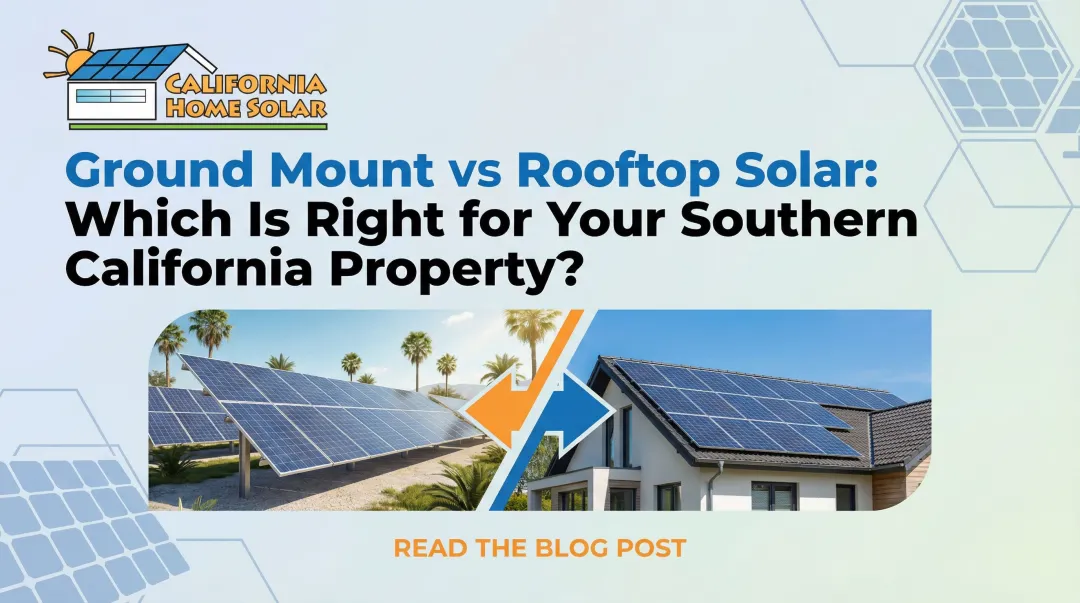
The right mounting system is the one that matches your roof type, captures your available sun exposure, clears local code requirements, and aligns with your production goals and budget. A south-facing shingle roof in good condition points clearly toward a fixed rail-based mount. A shaded north-facing rooftop on a property with open yard space points toward a ground mount instead.
This is a 25–30 year commitment. A professional on-site assessment is the right first step — one that accounts for your specific roof, local permit requirements, and Southern California sun angles that no general checklist can replicate. California Home Solar has been doing exactly that for homeowners across the Los Angeles area for 36 years.
Frequently Asked Questions
What is the best mounting structure for home solar panel installation?
There's no single best structure for every home. For most houses with a south- or west-facing roof in good condition, a fixed rail-based roof mount offers the best balance of cost and performance. Ground mounts are the stronger choice when the roof is shaded, north-facing, or structurally unsuitable.
How much does a solar panel mounting system cost?
California's median residential solar installed price was approximately $4.10 per watt before incentives in 2023, according to LBNL's Tracking the Sun report. On an 8 kW system, that's roughly $32,800 before the federal tax credit — covering mounting, labor, panels, and electrical equipment combined.
Can solar panels damage my roof?
Professionally installed systems with proper flashing and waterproofing don't damage roofs — UC San Diego research found rooftop panels actually reduced heat reaching the roof surface by about 38%. Damage risk comes from skipped flashing steps or improperly sealed penetrations, so vetting your installer's workmanship is essential.
What type of roof is best for solar panel installation?
Asphalt shingle roofs are the easiest and most cost-effective for standard rail mounts. Standing seam metal roofs are excellent because clamps attach without any penetrations. Tile roofs — common throughout Southern California — require specialized hardware but are fully compatible with professional installation.
How long does a solar panel mounting system last?
Quality mounting systems are engineered for 25–30 year service lives. IronRidge, Unirac, EcoFasten, and Schletter all back their racking products with 25-year warranties. Plan to inspect fasteners, flashing, and seals every 3–5 years to stay ahead of any wear.
Do I need to replace my roof before installing solar panels?
If your roof has fewer than 10 years of remaining life, replacing it before installation avoids the cost of removing and reinstalling the array later. The DOE estimates coordinating both projects saves an average of $4,000. A pre-installation roof inspection from a qualified contractor — ideally one who handles both roofing and solar — is the reliable way to make that call.