The racking system you choose directly shapes how much energy your array produces, what it costs to install, and how it performs over decades. A fixed-tilt ground mount on open land and a solar carport over a parking lot are fundamentally different investments with different trade-offs—and understanding those differences before committing is worth the time.
This guide covers the main types of ground mount and carport racking, how each works, the design variables that matter most, and how to match the right system to your property.
Key Takeaways
- Ground mount and carport racking are the practical choice when rooftop solar is impractical or insufficient for energy needs.
- Three primary types: fixed-tilt ground mounts, solar tracking systems, and carport/canopy structures.
- Fixed-tilt costs least; trackers maximize output; carports add dual value, combining shade with power generation.
- Foundation type — driven piles, helical piles, ground screws, or ballasted concrete — is determined by soil conditions and site requirements.
- Matching system type to your land, budget, and energy targets upfront avoids costly redesigns during permitting.
What Is Ground Mount & Carport Solar Racking?
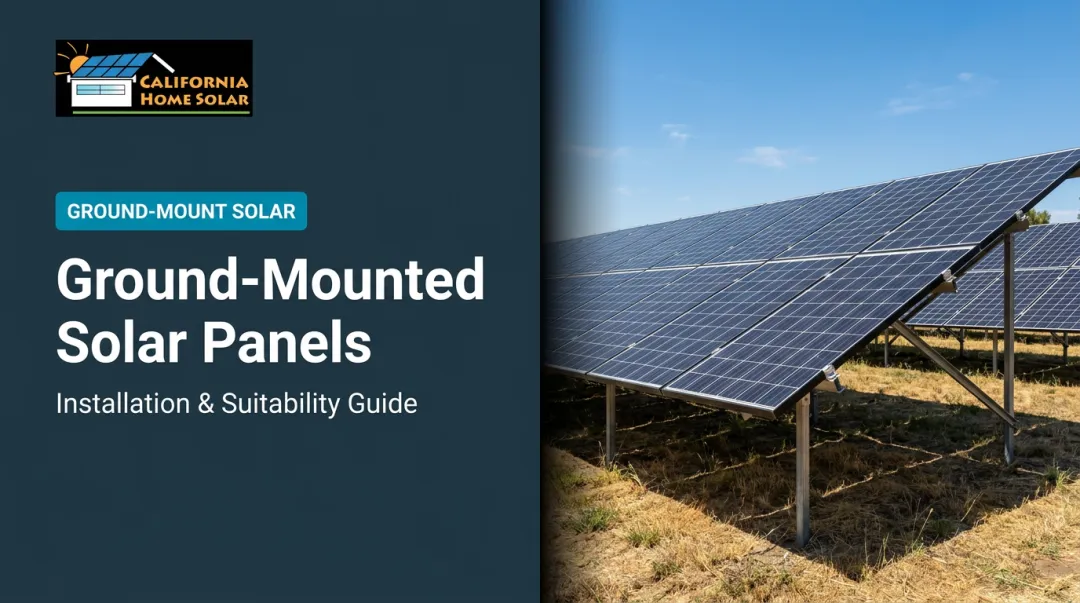
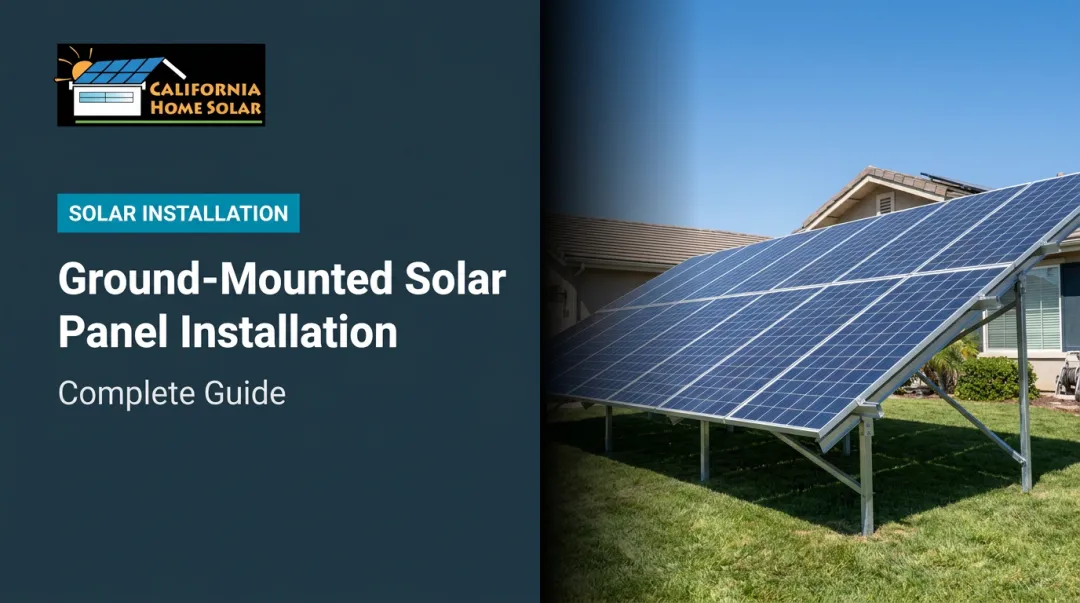
Ground mount solar racking is a structural support system—typically galvanized steel or aluminum—that anchors solar panels directly into the earth at a fixed or adjustable angle, independent of any building. Greentech Renewables describes these systems as using concrete piers, driven piers, ground screws, or ballasted footings to secure the array at grade.
Carport and canopy racking is an elevated variation. Instead of sitting at ground level, panels are mounted overhead on a supported canopy structure, generating power while creating covered parking or shaded space below. The structural demands are higher: columns, beams, and foundations must carry wind loads and panel weight at elevation. That added complexity is offset by the dual-use value, which makes carport systems a practical choice for commercial parking lots, retail centers, and multifamily properties.
Both system types work as alternatives or supplements to rooftop solar across residential, commercial, and utility-scale installations. Common use cases include:
- Open land on rural or suburban residential properties
- Large paved lots at commercial or industrial sites
- Buildings with shaded, structurally limited, or historically protected roofs
- Properties seeking to maximize generation capacity beyond rooftop space
Why Choose Ground Mount or Carport Over Rooftop?
The core advantage is placement freedom. Ground mount and carport systems can be sited, angled, and oriented for optimal sun exposure regardless of what your roof looks like. NREL's PVWatts models show that open-rack ground mount systems operate at a lower nominal cell temperature (45°C) compared to roof mounts with standard standoffs (~49°C). That 4-degree difference translates to more consistent output across the system's lifetime.
These systems make the most sense in specific situations:
- Aging or structurally limited roofs that can't support panel weight or won't last the system's 25-year lifespan
- Insufficient roof area — LBNL data shows residential PV roof coverage commonly falls to only 20–40% of total roof area, leaving many homes unable to meet full energy needs from the rooftop alone
- Open land or large parking areas where ground space is available and underutilized
- Commercial properties wanting a visible sustainability commitment or EV charging infrastructure
One real cost to factor in: LBNL research finds residential ground mounting adds roughly $0.40/W to installed cost compared to rooftop systems, due to additional structural materials, foundation work, and underground conduit. If your site constraints — roof condition, available area, or land use goals — point toward a ground mount, that premium is worth understanding upfront before comparing quotes.
Types of Ground Mount & Carport Solar Racking
Racking systems aren't interchangeable. The right type depends on how much space you have, what you're willing to spend, and how much energy you need to produce.
Standard Fixed-Tilt Ground Mount Racking
Fixed-tilt is the most widely used ground mount configuration. Panels are mounted on a rigid steel or aluminum frame at a pre-set angle (typically close to the site's latitude) and stay in that position year-round. No motors, no moving parts.
For Southern California, NREL's PVWatts uses a default tilt equal to site latitude and a true-south azimuth of 180°. For the Los Angeles area at approximately 34° N, that's a reasonable starting point for design, though the final angle should be modeled against your specific load profile and any shading constraints.
Strengths:
- Lowest installed cost of any ground mount type
- Simple installation with minimal mechanical failure risk
- Compatible with all foundation types
- Easy to maintain and clean
Limitations:
- Lower energy output than tracker systems since panels don't follow the sun
- Requires more land area than pole mounts for the same capacity
- The fixed tilt is a year-round compromise between summer and winter sun angles
For most residential ground mount projects and budget-conscious commercial sites, fixed-tilt is the practical starting point.
Solar Tracking Systems (Single-Axis & Dual-Axis)
Trackers are motorized ground mount structures that rotate panels throughout the day to follow the sun's path. They capture more direct sunlight by continuously adjusting panel angle, which directly increases energy output.
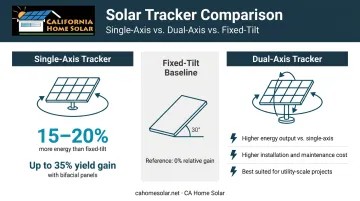
Single-axis trackers rotate on one axis (east to west), following the sun's daily arc. According to IEA PVPS research, single-axis trackers typically deliver 15–20% more energy than fixed-tilt systems, and bifacial panels on single-axis trackers can achieve up to 35% higher energy yield than fixed-tilt monofacial systems.
Dual-axis trackers rotate on two axes (east-west and north-south), adjusting for both daily sun movement and seasonal altitude changes. They capture more energy than single-axis systems but come at significantly higher cost and complexity. Dual-axis is generally reserved for utility-scale or high-value commercial applications where peak production justifies the investment.
Strengths:
- Measurably higher energy output — 15–35% more depending on panel type and configuration
- Can reduce panel count needed to hit production targets
- Single-axis tracker technology has matured significantly in cost and reliability
Limitations:
- Higher upfront cost and ongoing maintenance requirements for motors and sensors
- Needs more land: LBNL data shows trackers have ground coverage ratios of 0.25–0.40, versus 0.40–0.50 for fixed-tilt, meaning rows must be spaced farther apart to prevent self-shading during rotation
- More complex installation and commissioning
On large open sites with minimal shading constraints, that yield premium typically offsets the added mechanical cost within the system's lifetime.
Solar Carport & Canopy Racking
Solar carports are elevated structures supported by steel columns on reinforced concrete foundations. They hold panels overhead while creating functional covered space beneath. They're the highest-cost racking type, but they do two jobs at once: generate power and provide covered parking or outdoor shade.
Common configurations include:
- Single-aisle — covers one row of parking spaces
- Double-aisle — spans two rows, typically with a center column row
- Multi-bay custom — designed for large commercial or municipal lots
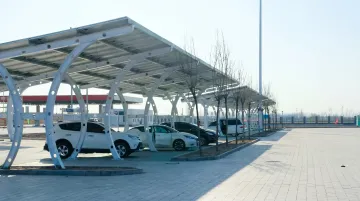
One of the most compelling applications in Southern California is integrating EV charging stations directly beneath the canopy. The California Energy Commission has committed over $55 million to expand public EV fast-charging infrastructure at businesses and public sites , and a solar carport that powers its own chargers is a natural fit for that direction.
Strengths:
- Dual-purpose value: energy generation and covered parking in one structure
- Doesn't require modification to existing buildings
- Naturally compatible with EV charging integration
- Visible sustainability statement for businesses and institutions
Limitations:
- Most expensive racking type : NREL Q1 2024 benchmark data puts commercial carport costs at roughly $1.99/Wdc, compared to approximately $1.49/Wdc for commercial fixed-tilt ground mounts and $1.54/Wdc for single-axis trackers
- Requires professional structural engineering and more extensive permitting
- Concrete foundation installation adds time and site disruption
Commercial properties, schools, and municipalities with large parking areas get the most out of carports — especially when EV charging is part of the plan.
Key Design Considerations for Ground Mount & Carport Racking
Choosing a racking type is only part of the decision. Several site-specific variables must be worked through before installation begins—each one affects cost, performance, and how long the system lasts.
Foundation Type and Soil Conditions
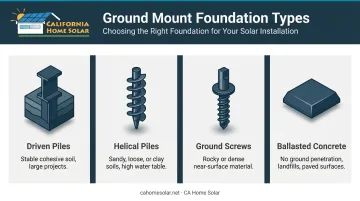
Foundation selection is a structural and geotechnical decision, not just a preference. The four main options each suit different site conditions:
- Driven piles — steel I-beams hammered into stable, cohesive soil; well-suited for large projects with favorable ground conditions
- Helical piles — spiral-shaped posts screwed into the earth; preferred for sandy, loose, or clay soils and sites with high water tables
- Ground screws — used where rock or dense material is present near the surface
- Ballasted concrete — the only option where ground penetration isn't possible, such as capped landfills or existing paved surfaces
Get a geotechnical study done before finalizing any ground mount design. In Southern California specifically, expansive soils, seismic design requirements, and coastal conditions can all affect pile embedment depth and foundation specification.
Tilt Angle, Orientation, and Shading
For fixed-tilt systems in the Los Angeles area, a starting tilt near 34° with true-south orientation is a sound baseline. The final angle should be modeled in NREL's PVWatts using site-specific coordinates and shading conditions.
Shade analysis is non-negotiable. Even partial shading from a single tree, adjacent structure, or neighboring panel row can meaningfully reduce output—particularly in string-inverter systems where one shaded panel affects the entire string.
Structural and Wind Load Engineering
All ground mount and carport structures must be engineered to meet California Building Code Chapter 16 and ASCE 7. For carports and elevated canopies, seismic force is calculated per ASCE 7 Section 13.6 using site-specific seismic parameters.
Stamped structural calculations from a licensed engineer are standard for these systems. Plan for them as a required part of the permitting package, not an optional add-on.
Electrical Wiring and Trenching
Ground mount arrays require underground conduit runs from the array to the building's electrical panel or inverter. The distance between the array and the interconnection point affects wire sizing, voltage drop, and trenching costs. Factor this in early during site selection—a ground mount sited 300 feet from the main panel costs more to wire than one positioned 50 feet away.
Permitting and HOA Considerations
California Civil Code Section 714 voids provisions that effectively prohibit solar energy systems, and Government Code Section 65850.5 requires cities and counties to approve qualifying solar applications through nondiscretionary permits.
Ground mounts and carports still face more site-specific review than rooftop systems. Setbacks, height limits, and land-use rules vary by municipality, so confirm these requirements early before finalizing your design.
Note: the streamlined permitting provisions under AB 2188 apply specifically to small residential rooftop systems. Ground mounts and carports go through a different process, so verify local zoning requirements before finalizing your system design.
How to Choose the Right Solar Racking System
The right choice depends on your specific site conditions, energy targets, budget, and how you intend to use the space—not on which system type is currently most popular.
| Factor | Fixed-Tilt Ground Mount | Solar Tracker | Solar Carport |
|---|---|---|---|
| Typical installed cost | ~$1.49/Wdc (commercial benchmark) | ~$1.54/Wdc | ~$1.99/Wdc |
| Energy output | Baseline | 15–35% more than fixed | Comparable to fixed-tilt |
| Land requirement | Moderate | Higher (wider row spacing) | Parking area (paved or not) |
| Maintenance | Minimal | Periodic motor/sensor service | Array + structural inspection |
| Best fit | Open land, residential or small commercial | Large open sites, output-priority | Commercial lots, EV integration |
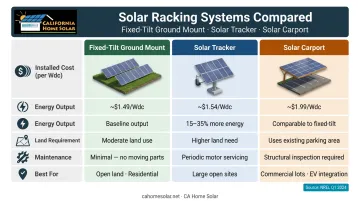
NREL Q1 2024 benchmark values; actual Southern California project costs will vary based on foundations, trenching, prevailing wage, and other site factors.
Matching your situation to the right system:
- Fixed-tilt delivers the lowest cost per watt and performs reliably in Southern California's consistent sun — the default choice when budget leads the decision.
- Single-axis trackers are worth modeling when you have open land and output is the priority; the 15–35% production premium over fixed-tilt is real and measurable.
- Carports make sense for large commercial parking lots where covered parking value, EV charging revenue, and visible sustainability goals help offset the higher capital cost.
- Irregular or constrained sites often call for pole mounts or custom configurations — a site-specific layout outperforms any generic template.
For Southern California homeowners and commercial property owners, the best starting point is a professional site assessment that accounts for your specific parcel, utility requirements, and local permitting conditions. California Home Solar has handled these decisions across Los Angeles County and surrounding communities for over 36 years, with ground mount installation services that cover the full process — from site assessment and permitting through final installation. Schedule a consultation to find out which system fits your property.
Frequently Asked Questions
Is a ground mount solar system more expensive than a rooftop solar system?
Generally, yes. LBNL data shows residential ground mounting adds roughly $0.40/W to installed cost compared to rooftop systems, due to additional racking, foundation work, and underground conduit. Ground mounts typically produce more energy because they can be positioned and angled optimally, which often keeps the total cost-per-kWh competitive over time.
How much land do I need for a ground mount solar system?
Plan for roughly 100 square feet per kilowatt of installed capacity, though setbacks, row spacing, and access paths increase the total footprint beyond that figure. Tracker systems also require wider row spacing than fixed-tilt arrays to prevent self-shading during rotation.
Do I need a permit for a ground mount solar system in California?
Yes. Ground mount and carport systems require local building and electrical permits in California. While Government Code Section 65850.5 mandates nondiscretionary approval for qualifying systems, ground mounts still face site-specific review for setbacks, height, and land use that varies by municipality. Verify zoning requirements early in your planning process.
Can a solar carport also charge electric vehicles?
Yes, and this is one of the most common use cases. Solar carports are routinely designed with integrated EV charging stations, allowing the canopy to generate the power that charges vehicles parked below. CA Home Solar offers EV charging station integration as part of their solar carport services.
What is the difference between single-axis and dual-axis solar trackers?
Single-axis trackers rotate panels on one axis (east to west) to follow the sun's daily arc, typically adding 15–20% more energy than fixed-tilt. Dual-axis trackers also adjust for seasonal changes in sun altitude, capturing more energy—but at higher cost and mechanical complexity. Dual-axis is rarely cost-justified outside utility-scale applications.
Are ground mount or carport systems better for commercial properties?
It depends on what's available. Carports are often the better commercial choice when large parking areas exist—they deliver energy plus covered parking and pair well with EV charging. Ground mounts suit commercial sites with open undeveloped land, agricultural properties, or facilities where parking canopies aren't a priority.
Conclusion
Ground mount and carport solar racking systems give property owners real options when rooftop installation isn't practical or can't meet the full energy load. Fixed-tilt mounts deliver cost-effective simplicity. Tracking systems push output higher but require more land and ongoing maintenance. Carports take it further, turning underused parking areas into dual-purpose structures that generate power and provide shade.
Choosing the right system means matching foundation method, tilt angle, structural engineering, and permitting requirements to the specific realities of your property. Getting that match right from the start avoids costly redesigns and maximizes long-term performance.
CA Home Solar has been helping Southern California homeowners and commercial property owners work through these decisions for over 36 years, with ground mount installation as one of their core services across Los Angeles County and the broader Southern California region. Schedule a site assessment to find the ground mount or carport racking solution that fits your property and energy goals.