This guide covers what actually makes a roof eco-friendly, the best material options for Southern California's climate, available rebates and financing, and what to look for when hiring a sustainable roofing contractor.
Key Takeaways
- Cool roofs can reduce annual air-conditioning energy use by up to 15% in warm climates
- Metal roofing contains 25%–95% recycled content, is 100% recyclable, and carries a Class A fire rating
- LADWP customers can access cool roof rebates of $0.20–$0.60 per sq ft
- Coordinate roof replacement with solar installation to avoid panel removal costs of $200–$300 per panel — potentially $7,000+ in extra fees
- For Southern California homes, a Class A fire rating is required on every eco-friendly roofing material
What Makes a Roof Truly Eco-Friendly?
Not every product marketed as "green" earns the label. A genuinely eco-friendly roof performs well across five criteria:
| Criterion | What to Look For |
|---|---|
| Energy efficiency | Verified solar reflectance and thermal emittance data (CRRC-rated) |
| Durability | Long service life = fewer replacements, less landfill waste |
| Recycled/sustainable content | Product-specific recycled material percentages |
| Low embodied carbon | Environmental Product Declarations (EPDs) for manufacturing impact |
| Low chemical emissions | Low-VOC coatings, adhesives, and underlayments |
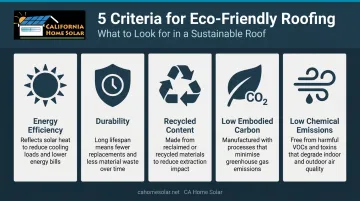
No single standard covers all five dimensions. The Cool Roof Rating Council (CRRC) handles reflectance and emittance testing, while LEED addresses heat-island reduction, durability management, and low-emitting materials. Pulling from both frameworks gives you the most complete picture.
Southern California's Non-Negotiables
Two criteria should rank above the rest for homes in Los Angeles County and surrounding communities:
- Energy efficiency — reflective materials directly cut cooling loads in a climate where AC runs year-round
- Class A fire rating — CAL FIRE requires Class A roof coverings in California, tested under ASTM E108, NFPA 256, and UL 790. Every material on your shortlist must pass as an assembly, not just as a standalone product
Tradeoffs exist in every material category. Natural slate lasts a century but involves disruptive quarry mining. Recycled synthetic alternatives score better across the full sustainability spectrum. Every choice involves compromise; the point is knowing which tradeoffs you're making before you commit.
Top Eco-Friendly Roofing Materials for Southern California
Cool (Reflective) Roofs
Cool roofs use light-colored materials and reflective coatings to bounce solar radiation away from the home. In Southern California's sun-heavy climate, the performance data is compelling: according to Lawrence Berkeley National Laboratory, substituting a cool roof for a conventional one can reduce annual air-conditioning energy use by up to 15% in warm or hot climates. The EPA adds that cool roofs can reduce peak cooling demand by 11% to 27% in air-conditioned residential buildings.
California's Title 24 energy code sets minimum thresholds. For steep-slope roofs (≥2:12 pitch) in Climate Zones 10–15, the 2025 compliance manual requires aged solar reflectance of 0.20 and thermal emittance of 0.75, or an SRI of 16. Low-slope roofs in Zones 13 and 15 face stricter requirements. Check your specific climate zone before selecting a product.
Metal Roofing
Metal checks more sustainability boxes than almost any other roofing material. Key verified facts:
- Recycled content: 25%–95%, with cool metal roofing typically containing at least 25% recycled material
- End-of-life: 100% recyclable
- Fire rating: Class A under UL 790/ASTM E108
- Lifespan: 50+ years
That recyclability matters more than it sounds. The EPA estimated 600 million tons of construction and demolition debris were generated in the US in 2018 — reducing replacement frequency keeps material out of that waste stream. For fire-prone areas from Malibu to the Antelope Valley, the Class A rating combined with long-term durability makes metal a logical choice.
Recycled and Synthetic Shingles
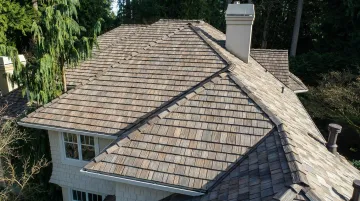
Composite shingles made from recycled rubber, plastic, or polymer replicate the look of slate or cedar shake — without the raw-material extraction that comes with quarried or harvested alternatives. Leading products from manufacturers like Brava, F-Wave, and Malarkey carry:
- Class A fire rating (assembly-dependent — verify with the specific product data sheet)
- UL 2218 Class 4 impact rating — the highest available, tested with a 2-inch steel ball dropped from 20 feet
- 50-year warranties on select products
On the waste-diversion side, Malarkey reports that an average 30-square roof using their Legacy shingles diverts the equivalent of 4,000 plastic bags and 6 rubber tires from landfills.
Solar Roofing and Solar-Ready Roofs
Solar tiles embed photovoltaic cells directly into roofing material. Traditional panel arrays mounted on compatible eco-roofing achieve the same energy output with more flexibility. Both approaches make strong sense in Southern California, where usable sunlight is available nearly year-round.
CA Home Solar installs both: solar shingle systems (a typical 5.8 kW system uses approximately 500 CIGS-based shingles) and traditional panel arrays on solar-ready roofing. Solar-ready installations include structural enhancements sized for correct load distribution, so panels are mounted safely from the start.
Clay and Concrete Tile
Clay and concrete tiles are a fixture in Southern California architecture for good reason: they're fire-resistant, naturally insulating, and long-lasting. Concrete tile EPDs show reference service lives of 40–50+ years. Clay tiles can last 75–100 years or more with proper maintenance.
Eco tradeoffs to consider:
- Clay extraction can be environmentally disruptive
- Concrete production generates CO2 (embodied carbon data is available through EPDs from manufacturers)
- Both materials are heavy — a structural assessment may be required before installation
- Specify locally sourced tiles and low-VOC coatings to reduce the environmental footprint
Financial and Environmental Benefits
Energy and Maintenance Savings
Cool roofs and metal roofing reduce cooling loads directly, cutting AC runtime and lowering bills each month. CA Home Solar cites potential energy savings up to 30% for homes upgrading to cool roofing materials, based on industry performance data. Over a 20–30 year horizon, the math often favors the higher upfront investment: fewer repairs, longer replacement intervals, and lower monthly utility costs compound meaningfully.
Environmental Impact at Scale
Individual roofing choices add up across a city the size of Los Angeles. At the neighborhood level, these decisions produce measurable results:
- Reduced cooling demand eases strain on the electrical grid during peak summer hours
- Recycled-content materials — metal roofing, synthetic shingles — divert waste from construction and demolition streams
- EPA data puts that waste stream at 600 million tons annually in the US
Home Value
Solar-integrated roofing has documented resale value. Zillow Research found that homes with solar panels sold for 4.1% more than comparable homes without them. NAR data shows reflective roofs and passive cooling features also carry resale weight — especially in warm-climate markets like Southern California, where buyers factor utility costs into purchase decisions.
California Incentives and Rebates for Eco-Friendly Roofing
LADWP Cool Roof Rebates
LADWP customers can access rebates directly through the Consumer Rebate Program:
- Low-slope roofs (≤2:12): $0.20/sq ft for SRI ≥78; $0.60/sq ft for SRI ≥85
- Steep-slope roofs (>2:12): $0.20/sq ft for SRI ≥20; $0.60/sq ft for SRI ≥35
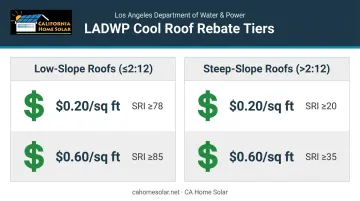
These rebates are active as of 2025. SCE and SoCalGas do not currently list verified cool roof rebates — so for most Southern California homeowners, LADWP remains the primary utility-based option. Federal programs offer a separate layer of potential savings, though eligibility is more limited than many homeowners expect.
Federal Tax Credits
The federal 25C Energy Efficient Home Improvement Credit covers insulation, windows, HVAC, and related equipment. However, current IRS and Energy Star sources do not list roofing materials — cool roofs, metal, tile, or shingles — as eligible 25C categories.
Before claiming any federal credit for roofing, confirm current eligibility with the IRS or a licensed tax professional.
PACE Financing
The HERO program is no longer enrolling new applicants — both CAEATFA and WRCOG confirmed it closed to new financings on January 16, 2021. Other PACE programs may still be available in Southern California; check the DSIRE database or ask your contractor about currently active options.
California Home Solar can help identify which financing programs apply to your specific project. Call 877-903-1012 to discuss what's currently available in your area.
Pairing an Eco-Friendly Roof with Solar Panels
Timing matters here — and the cost of getting it wrong is concrete.
EnergySage reported that removing and reinstalling solar panels for a roof replacement costs approximately $200–$300 per panel, with total project costs exceeding $7,000. If your roof needs replacing in five years, installing panels today means paying that cost twice.
Why to Plan Both Together
- Eliminates future panel removal/reinstall expense
- Ensures the roofing substrate and structural load ratings are matched to the solar system from installation day
- Maximizes the combined investment timeline — a 50-year metal roof paired with a 25-year solar system requires only one panel replacement
Compatible Material Combinations
| Roofing Material | Solar Panel Compatibility |
|---|---|
| Metal (standing seam, interlocking) | Compatible with clamp-based mounting systems |
| Composite/synthetic shingles | Compatible with penetrating mounts (IronRidge QBase and similar) |
| Solar tiles | Fully integrated — no separate mounting required |
| Clay/concrete tile | Compatible with tile hooks; requires experienced installer |
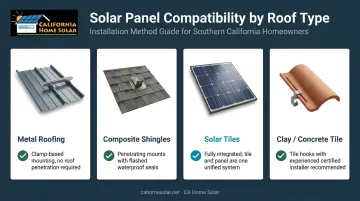
CA Home Solar handles both roofing and solar installation across Los Angeles and Southern California, recognized as a Top 500 Solar Contractor by Solar Power World in 2021, 2023, and 2025. A dedicated project manager oversees both scopes, giving homeowners one contact for the full job — no hand-off gaps, no coordination headaches.
How to Choose an Eco-Friendly Roofing Contractor
Verify the Right Credentials
- California C-39 license — the CSLB classification for roofing contractors who install products that seal, waterproof, and weatherproof structures
- Licensed, bonded, and insured — confirm through the CSLB license lookup tool
- Experience with eco-friendly materials specifically — general roofing experience doesn't guarantee familiarity with cool roof thresholds, metal mounting systems, or synthetic shingle assembly requirements
Ask the Right Questions
Before signing a contract, ask:
- What are the sustainability tradeoffs of each material? The answer should cover recycled content, fire ratings, and embodied carbon — not just cost and appearance.
- How is tear-off material disposed of? Responsible contractors have a clear process for recycling metal, shingles, or tile rather than sending everything to landfill.
- What financing programs do you work with? Contractors familiar with LADWP rebate applications and current PACE programs can simplify the process.
- Can you provide references from eco-friendly roofing projects in Southern California? Prioritize references from inland valley or hillside installs, where heat load and fire risk mirror most local conditions.
Warranty Structure
Eco-friendly materials often carry 20–50+ year warranties, but those warranties only hold if installation meets manufacturer specifications. Ask for:
- Manufacturer material warranty (product-specific)
- Contractor workmanship warranty (separate from the material warranty)
- Written confirmation that the assembly — not just the product — carries the stated Class A fire rating
If you're planning to add solar alongside your roof replacement, choosing a contractor who handles both avoids coordination gaps around mounting systems and roof penetrations. CA Home Solar is a licensed and bonded contractor with 36 years of experience in Southern California, a 5-Star Yelp rating, and integrated solar and roofing capabilities. That combination is worth factoring in when you're comparing bids.
Frequently Asked Questions
What are the most eco-friendly roofing materials?
Metal roofing, recycled synthetic shingles, cool roofs, and solar tiles rank highest across energy efficiency, durability, and material sustainability. The best choice depends on your budget, fire risk exposure, and whether solar integration is a priority.
What damages asphalt shingles?
UV exposure degrades the asphalt layer as granules wear away, while heat cycling causes expansion and contraction that cracks the material over time. Metal and synthetic composite alternatives are engineered to resist both stressors, with lifespans of 40–70 years compared to asphalt's 15–30.
What color roof increases home value?
Light and neutral-colored roofs improve energy efficiency and can appeal to buyers in warm-climate markets like Southern California. Solar-integrated roofing has the most documented value impact — Zillow found solar homes sell for 4.1% more than comparable non-solar homes.
Is eco-friendly roofing more expensive upfront?
Yes, most eco-friendly materials cost more initially than standard asphalt shingles. However, longer lifespans, lower energy bills, and available rebates (such as LADWP's $0.20–$0.60/sq ft cool roof rebate) make them more cost-effective over a 15–30 year horizon.
Are there rebates for eco-friendly roofing in California?
LADWP customers can access cool roof rebates of $0.20–$0.60 per square foot for qualifying reflective roofs. The federal 25C credit does not currently list roofing products as eligible. Consult with your contractor and a tax professional for current program details.
Can I install solar panels on an eco-friendly roof?
Most eco-friendly roofing materials — particularly metal and composite shingles — are compatible with solar panel mounting systems. CA Home Solar handles both roofing and solar installation, so planning them together avoids future removal costs and makes the most of both investments.