Introduction
Signing a solar contract feels like the hard part is over. Then the weeks start passing, and the panels still aren't on your roof.
That frustration is common — and completely understandable. The reality is that the solar installation process involves far more than physical panel placement. Permitting applications, engineering sign-offs, utility approvals, and city inspections all have to happen in sequence before your system can legally generate power.
When an inexperienced installer misses a permit deadline, fails an inspection, or files an incomplete interconnection application, a 2-month project can easily stretch to 4–6 months. Choosing the right contractor matters more than most homeowners realize.
Here's a complete breakdown of every stage in the solar installation timeline — from initial consultation to your first day generating power — with specific timing details for Los Angeles and Southern California homeowners.
Key Takeaways
- The full process typically takes 60–120 days from signed contract to system activation
- Physical installation is the fastest step: most residential systems go up in 1–3 days
- Permitting and utility PTO approval are the slowest phases, often 2–8 weeks combined
- California's solar permitting laws have enabled instant or same-day approvals in many LA-area cities, cutting weeks off the process
- Installer experience with local permitting offices is the single biggest factor in keeping timelines on track
Before Installation: The Steps That Set the Foundation
The pre-installation phase typically spans 4–10 weeks and includes four sequential steps: site assessment, system design, permitting, and equipment procurement. This is where experienced installers earn their value — and where inexperienced ones lose time.
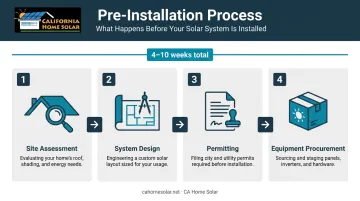
Choosing Your Installer and Initial Site Assessment
A thorough site assessment covers:
- Roof condition — age, material, remaining lifespan, and whether solar-ready structural reinforcement is needed
- Orientation and shading — roof pitch, compass direction, and any trees or structures that cast shadows during peak production hours
- Electrical panel review — whether your current panel can support the additional circuit load
- Utility bill analysis — 12 months of usage data to size the system correctly
If a roof needs repairs or replacement, that work must be completed before panels go up. CA Home Solar handles both roofing and solar installation, which means roof issues identified during the assessment can be resolved in the same project without adding a separate contractor or timeline.
Get at least two or three quotes, and verify that any installer you consider is licensed, bonded, and has specific experience with permitting in your municipality.
System Design and Homeowner Sign-Off
Once the site assessment is complete, a solar engineer designs the system: panel count and layout, inverter selection (microinverters like Enphase IQ8, or string inverters like SolarEdge), wiring configuration, and code compliance.
The installer cannot file for permits until you approve the final design. Delays here are one of the most common homeowner-caused hold-ups. Aim to review and respond within 24–48 hours of receiving the design documents.
Permitting: The Phase That Varies Most
Solar installations require both a building permit and an electrical permit. HOA-governed communities may need a separate approval as well — California's Solar Rights Act limits unreasonable HOA restrictions, but the review process still takes time.
California's SB 379 requires non-exempt jurisdictions to implement automated online permitting for residential solar systems up to 38.4 kW AC. The CEC tracks 429 non-exempt jurisdictions through its status dashboard. Where SolarAPP+ has been adopted, permits can be issued instantly for qualifying systems.
Even so, not every jurisdiction in Los Angeles County uses automated permitting. Some cities and unincorporated areas still run manual review processes. An experienced local installer will know which jurisdictions move fast and which require more lead time — and handles all permitting paperwork on your behalf.
CA Home Solar assigns a dedicated project manager to every installation, which means someone is actively tracking permit status rather than waiting passively for approvals.
Installation Day: What Happens on Your Roof
After weeks of paperwork, the physical installation is the fastest part of the process — and the most visible. Most residential solar installations in Southern California wrap up in one to three days, a timeline consistent with Enphase's installation process documentation and standard industry practice.
What the Crew Does On-Site
The installation sequence typically runs:
- Mount the racking system — rails and hardware are secured to the roof structure
- Place and wire the solar panels — panels are attached to the rails and connected in the designed configuration
- Install the inverter — typically mounted on an exterior wall or in the garage near the electrical panel
- Connect to the main electrical panel — a new dedicated circuit breaker is added
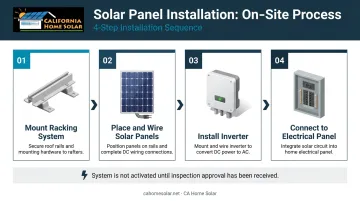
The system will not be switched on at the end of installation day. City inspection and utility approval must happen first. Most homeowners don't expect this, but those steps are required before your system can go live — no exceptions.
Your Role on Installation Day
Your job that day is straightforward:
- Be present, or have a trusted adult available
- Ensure the crew can access both the roof and the electrical panel
- Verify the equipment delivered matches the make and model listed in your contract before panels go on the roof
What Can Extend Installation to Two or Three Days
- Adding battery storage, which may require a utility meter removal and reinstallation
- Larger systems over 10 kW
- Complex roof layouts with multiple planes or dormers
- Any roof repairs or panel upgrades that weren't completed beforehand
After Installation: Inspections, Utility Approval, and Activation
The period between installation completion and system activation typically takes 2–6 weeks. Two distinct approvals are required: a local building inspection and the utility company's Permission to Operate.
City or County Inspection
A local building department inspector visits your property to verify that the system was installed to code — proper roof attachment, correct electrical connections, and compliance with setback and safety requirements. This inspection is usually scheduled within 1–2 weeks of installation completion and takes less than an hour on-site.
Passed inspections on the first attempt are the norm with experienced contractors. Failed inspections requiring rework are a red flag — and can add weeks to your timeline. CA Home Solar's Top 500 Solar Contractor recognition reflects consistent installation quality built over 36 years in Southern California.
Utility Interconnection and Permission to Operate
PTO (Permission to Operate) is the utility company's formal sign-off allowing your solar system to connect to the grid and be legally switched on. The process involves:
- Installer files the interconnection application
- Utility reviews the application and the installed system
- Utility sends a representative to verify installation and swap the meter if needed
- Utility issues PTO
For SCE customers, most receive PTO within 10 business days, though complexity or application issues can extend that timeline. LADWP requires LADBS permit finalization before their own solar inspection and net meter installation — the process is sequential and involves multiple handoffs, but LADWP does not publish a specific typical day range for residential PTO.
The utility review timeline is largely outside the homeowner's and installer's control. Choosing an installer who submits accurate, complete interconnection paperwork from the start is the best way to avoid preventable delays.
A Note on NEM 3.0
California's Net Billing Tariff (NEM 3.0) applies to SCE, PG&E, and SDG&E customers who submitted interconnection applications on or after April 15, 2023. Under this policy, exported solar energy is credited at avoided-cost values — typically lower than import rates.
Before interconnection is finalized, confirm with your installer how the system design accounts for this shift. Self-consumption and battery storage carry more financial weight under NEM 3.0 than they did previously.
What Can Delay Your Solar Installation Timeline
| Delay Factor | Typical Impact |
|---|---|
| Manual permitting jurisdiction | +2–4 weeks |
| HOA approval required | +2–4 weeks |
| Unpermitted prior work on property | +4–6 weeks |
| Failed city inspection | +2–4 weeks |
| Incomplete interconnection application | +1–3 weeks |
| Battery storage equipment lead time | +1–3 weeks |
| Homeowner slow to approve design | +1–2 weeks |
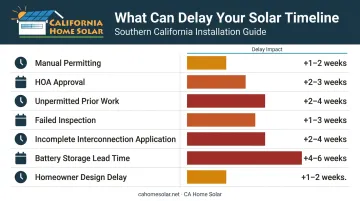
You control more of the timeline than you might think. A few habits that prevent delays:
- Respond to installer communications within 24 hours
- Pre-schedule any roof repairs or panel upgrades before the installation date is set
- Be available on installation day — rescheduling costs time
- Review and sign the system design promptly
Equipment delays are a separate issue. Solar panel supply chains have largely stabilized, but battery storage units often carry longer lead times. If storage is part of your plan, ask about battery availability before signing a contract.
Pro Tips for a Smoother Solar Installation
A few decisions made early in the process can meaningfully cut weeks from your timeline. These tips apply whether you're just starting to compare installers or are already mid-process.
Vet installer reviews for inspection results and PTO timelines, not just general satisfaction scores. An installer with clean utility filings and first-pass inspection records will consistently deliver shorter timelines.
Start the process in late fall or early winter. Demand is lower, installer schedules are more open, and your system will be ready by summer — right when SCE rates (currently averaging 34.5 cents/kWh for a typical residential customer) and AC usage peak.
Ask your installer about filing for utility interconnection during or immediately after installation — before the inspection is complete. Some experienced installers do this proactively and can shave one to two weeks off the total timeline.
If your roof needs work, confirm it's scheduled and completed before your installation date is locked in. Working with a contractor who handles both roofing and solar under one roof — like CA Home Solar — eliminates the scheduling gaps that come with managing two separate crews.
Frequently Asked Questions
Can I run AC with solar panels?
Yes, a properly sized solar system can offset your air conditioning load, and in Southern California's climate, AC savings are one of the primary financial drivers for going solar. The system must be sized to account for your AC usage during the site assessment phase.
How long does it take to get a solar permit in California?
California's SB 379 has enabled instant or same-day permitting in many jurisdictions through automated platforms. Some LA County municipalities still run manual review processes that take longer — an experienced local installer will know the expected timeline for your specific city.
What happens if my roof needs repairs before solar installation?
Roof repairs or replacements must be completed before panels are mounted — removing and reinstalling panels later adds cost and delay. Reputable installers flag this during the site assessment. CA Home Solar offers roofing services alongside solar installation, so both can be coordinated under one project.
What is PTO and how long does it take in Southern California?
PTO is the utility's formal authorization to switch your solar system on and connect to the grid. SCE states most customers receive PTO within 10 business days. LADWP involves multiple sequential steps — permit finalization, a solar inspection, and net meter installation — so ask your installer for a realistic timeline specific to your jurisdiction.
Does adding battery storage make the installation take longer?
Battery storage can add one to three weeks due to equipment lead times and the additional utility coordination required for meter work. Confirm battery availability with your installer before signing a contract.
When will I start saving on my electricity bill after going solar?
Savings begin the day your system receives PTO and is switched on, typically 60–120 days after signing the contract.