For LA-area homeowners, maintenance isn't something to revisit every few years. It's an active part of protecting a system that, over 25 years, represents tens of thousands of dollars in utility savings—especially when California residential electricity costs 33.35 cents/kWh, nearly double the national average of 18.83 cents/kWh.
This guide breaks down exactly what solar panel maintenance costs, what drives prices up or down, and how to budget smart across a system's full lifetime.
Key Takeaways
- Annual solar panel maintenance runs $300–$720 for most residential systems, covering cleaning and inspection
- The biggest cost variables are system size, panel type, roof access, and local environmental conditions
- SoCal homeowners near the coast, desert edges, or wildfire corridors typically need 2–4 cleanings per year
- The single largest planned expense over a system's life is inverter replacement at 10–15 years, not routine upkeep
How Much Does Solar Panel Maintenance Cost?
Most homeowners pay $300–$720 per year for routine solar panel maintenance. Costs vary by service type, system size, and local conditions. Skipping maintenance entirely tends to cost more over time — minor issues become major repairs.
Typical Annual Cost Range
According to HomeAdvisor's 2025 data, most residential homeowners pay $390–$720 per year, with an average around $520. Fixr supports a slightly wider range of $300–$700, with a $400 national average. The combined planning range of $300–$720/year covers routine cleaning and inspection for most homes.
Here's how plan types break down:
| Plan Type | Typical Annual Cost |
|---|---|
| Cleaning only | $200–$400 |
| Cleaning + inspection | $300–$720 |
| Comprehensive plan (minor repairs included) | $500–$1,000+ |
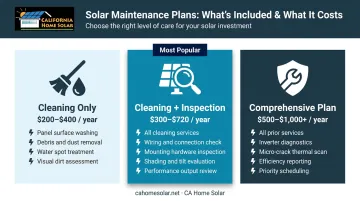
These figures cover labor, cleaning solution, and a visual inspection. They exclude major component repairs, inverter replacement, pest damage, and roof removal/reinstall work.
Cost by Service Type
Individual service costs vary by job. Here's what to budget per visit or event:
| Service | Cost Range |
|---|---|
| Professional cleaning (full system) | $150–$500 |
| Cleaning per panel | $15–$35/panel |
| Annual inspection (visual) | $150–$300 |
| Electrical inspection | $200–$300 |
| String inverter replacement | $800–$2,500+ |
| Microinverter replacement (each) | $150–$350 |
Sources: Angi 2026, Fixr, HomeAdvisor 2025
Cost by System Size
Some contractors charge per panel; others use a flat system fee. Annual maintenance costs scale with system size:
| System Size | Panels | Annual Maintenance Range |
|---|---|---|
| Small (under 5 kW) | ~10–15 panels | $225–$375 |
| Medium (5–10 kW) | ~20 panels | $300–$500 |
| Large (10 kW+) | 30+ panels | $450–$750+ |
Larger systems take more time and labor, and some large arrays in high-soiling areas can push costs above the $720 typical ceiling.
What Factors Affect Solar Panel Maintenance Costs?
Pricing depends on technical, environmental, and service-specific factors. What applies to a Malibu coastal home is different from a Palmdale desert property or a hillside home in Palos Verdes—and those differences show up in your bill.
System Size and Panel Type
Larger systems simply require more time, which raises cost directly. Panel type also matters:
- Monocrystalline panels are more durable and need less frequent attention
- Polycrystalline falls in the middle for maintenance requirements
- Thin-film panels are more delicate and carry higher risk of damage during cleaning
If you have thin-film panels, always confirm your provider has experience with them before booking.
Location and Local Climate
Southern California has some of the most varied solar maintenance conditions in the country. NREL's soiling research found that an annual soiling rate of just 5% can measurably reduce energy output—and across 16 Southwest U.S. sites, mean soiling losses ranged from 4.3% to 15.5% depending on location. At California's electricity rates, that's real money.
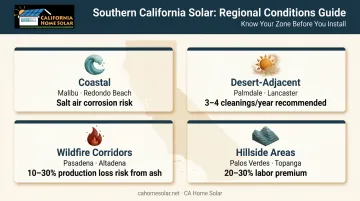
Key local drivers by area:
- Coastal (Malibu, Redondo Beach, Hermosa Beach): Salt air accelerates hardware corrosion; panels need more frequent checks on mounting hardware and wiring connections
- Desert-adjacent (Palmdale, Antelope Valley, Lancaster): Heavy dust accumulation between rain events; most homes here need 3–4 cleanings per year
- Wildfire corridors (Pasadena, Altadena, Topanga, Canyon Country): Schedule post-ash cleanings promptly—NREL research found wildfire smoke can reduce solar production by 10–30% during peak hours
- Hillside areas (Palos Verdes, Topanga, Rolling Hills): Steep roofs and complex access add a labor premium of 20–30% over flat suburban rooftops
Roof Access and Installation Type
Steep roofs, multi-story homes, and complex rack configurations increase labor time and cost. Ground-mounted systems are the easiest and cheapest to service.
Maintenance Frequency and Provider Type
One-time visits cost more per service than contracted semi-annual plans. Most SoCal homeowners benefit from 2–4 cleanings per year given local dust, ash, and dry periods. Bundling cleaning with an inspection in a single visit reduces your overall annual spend.
Two cost factors worth keeping in mind:
- Labor rates: National average is ~$100/hour; LA-area rates run higher given local market conditions
- Provider quality: Unlicensed or inexperienced technicians can scratch panel surfaces or void warranties—repairs cost far more than the savings from a cheap service call
Solar Panel Maintenance Cost Breakdown
Solar maintenance costs fall into three buckets: routine service, repairs, and planned component replacements. Knowing what each costs — and when to expect it — is how you build an accurate budget across a 25-year system life.
Routine Cleaning and Inspections
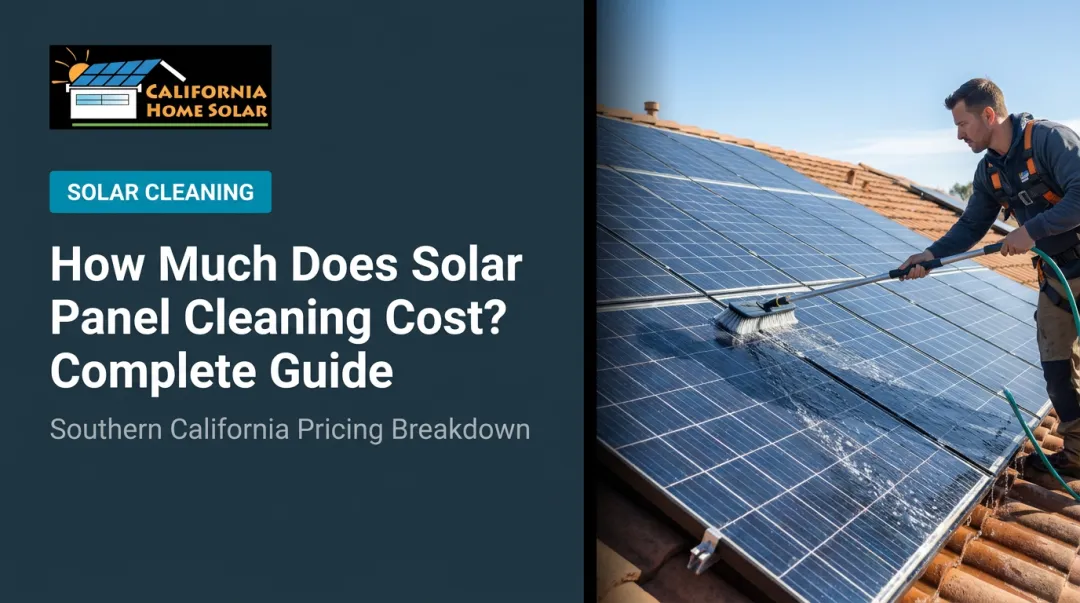
A standard professional visit typically includes:
- Deionized water cleaning (prevents spots and streaks)
- Soft-brush debris removal
- Visual check for cracks, discoloration, and hot spots
- Inverter status review
- Mounting hardware inspection
This is the baseline recurring cost to plan for annually — or twice a year in higher-soiling areas like the San Fernando Valley or coastal LA. California Home Solar's cleaning service includes a post-cleaning performance check to confirm output has recovered, and offers a free estimate for homeowners who want a starting point.
Repair Costs
Repairs are unpredictable but become more likely after year 10. Use this as a reference:
| Repair Type | Cost Range |
|---|---|
| Loose or chewed wiring | $100–$400 |
| Cracked panel / broken glass | $120–$550 |
| Rust/corrosion treatment | $150–$350 |
| No-voltage / inverter communication failure | $400–$3,000 |
Source: Angi 2026, Fixr
Budget these as contingency costs, not annual line items. Systems that skip professional inspections for several years tend to arrive at repairs with compounding damage — wiring degradation alongside corrosion, for example — that drives costs toward the higher end of those ranges.
Inverter Replacement
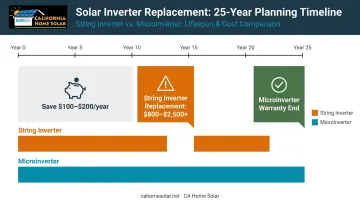
This is the single largest planned maintenance expense in a system's lifetime. Budget for it proactively:
- String inverters: Lifespan of 10–15 years; replacement runs $800–$2,500+
- Microinverters: Often warrantied for 25 years (Enphase IQ8/IQ7 carry a 25-year limited warranty); individual unit replacement runs $150–$350 each
If your system has a string inverter and is approaching year 10, start setting aside $100–$200 per year now. A $1,500 replacement is manageable when planned for; it's painful when it arrives without warning mid-summer.
Panel Removal, Reinstallation, and Pest Protection
Two periodic costs that catch LA homeowners off guard:
- Roof removal and reinstall: Panel removal for a roof replacement runs $2,000–$3,000+ in most cases; Fixr estimates $2,800–$4,800 for a full project. Common in older LA housing stock where roofs hit end-of-life before the solar system does.
- Bird/pest nest removal: Bird nesting under panels is common across LA County. Removal runs $200–$500; a critter guard mesh kit costs $60–$200 installed proactively. Either way, it's far less than the wiring repairs birds cause once established.
DIY vs. Professional Solar Panel Maintenance
The choice between DIY and professional service comes down to safety, warranty protection, and what the task involves. Most homeowners can handle a short list of low-risk tasks — everything beyond that requires a licensed technician.
What Homeowners Can Safely Do Themselves
For accessible, low-pitch systems, these tasks are reasonable DIY:
- Ground-level visual inspections using binoculars to check for visible cracks or discoloration
- Monitoring system output through your inverter app or monitoring platform (CA Home Solar provides free 24/7 system monitoring to its customers)
- Gentle rinsing with a garden hose—cold water, no pressure washer—on accessible panels in the early morning before panels heat up
- Clearing visible surface debris like leaves or bird droppings from safely reachable panels
DIY supplies (soft brush, hose, basic cleaning tools) run $30–$250. Roof access on steep or wet surfaces, electrical diagnostics, and any repair work are off-limits for DIY — attempting them risks serious injury and voids most manufacturer warranties.
When to Call a Professional
Contact a qualified solar technician when you notice any of the following:
- 10%+ drop in energy production that persists after a cleaning
- Inverter error codes or communication failures
- Visible cracks, discoloration, or physical damage to panels
- Burning smell from the inverter or wiring
- Post-wildfire ash buildup across the array
- Any maintenance requiring roof access on a pitched or multi-story home
Research shows professional cleaning can improve production by 10–25% depending on debris accumulation — a real difference at California's average electricity rate of around $0.30/kWh. CA Home Solar's team (36 years serving the LA area) provides professional inspections and cleaning across communities from Palmdale to Malibu to Palos Verdes.
How to Keep Your Solar Panel Maintenance Costs Low
Smart maintenance habits reduce long-term costs without sacrificing performance. A handful of targeted habits do most of the heavy lifting.
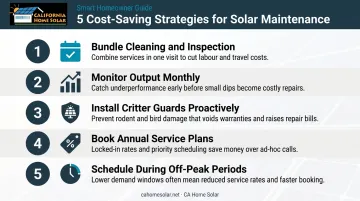
Cost-Saving Strategies
- Bundle cleaning and inspection into one visit — reduces per-trip labor cost significantly
- Monitor system output monthly — catching a 5% efficiency drop early is far cheaper than addressing a 20% loss that's been accumulating for two years
- Install critter guards proactively — a $60–$200 mesh kit now prevents $200–$500 in nest removal plus potential wiring repair costs later
- Ask about annual service plans — contractors including CA Home Solar often offer discounted rates for customers who book in advance; the company has run seasonal promotions like 30% off for pre-scheduled cleanings
- Schedule during off-peak periods — late winter and early spring (before fire season) tend to offer better availability and occasionally lower rates
Common Budgeting Mistakes to Avoid
- Ignoring O&M entirely when evaluating solar ROI — routine maintenance is a real cost that belongs in your payback calculation
- Skipping maintenance to save short-term — NREL data shows Southwest sites experience 4.3–15.5% mean soiling losses; at California electricity rates, that's a significant dollar loss per year
- Choosing the cheapest provider without verifying licensing, insurance, and solar-specific experience — unqualified cleaning can scratch panel glass, damage seals, or void your warranty
- Failing to keep service records — many manufacturer warranties exclude neglect-related damage, and documented maintenance history is your protection
DIY Cleaning Tips (Safe Practices)
For homeowners handling light maintenance on accessible systems:
- Clean in early morning before panels heat up — cold water on hot glass can cause micro-fractures
- Use a soft brush or plain garden hose; never a pressure washer
- Skip abrasive cleaners, dish soap, or anything that leaves residue
- Never climb a steep or wet roof without proper fall protection — OSHA mandates it for fall hazards of 4 feet or more, and rooftop conditions change fast
- For anything beyond a gentle rinse at ground level, call a professional
Conclusion
For most Southern California residential systems, plan on $300–$720 per year for routine cleaning and inspection — a predictable expense relative to what panels produce. Factor in occasional repairs as systems age, and plan ahead for inverter replacement at the 10–15 year mark—that's where the biggest single expense lives.
Skipping maintenance risks energy losses and voided warranty coverage. Consistent professional care keeps panels producing closer to their original capacity for decades. In a state where electricity costs over 33 cents per kWh, every percentage point of recovered output has real financial weight.
If you're ready to assess what your system actually needs, contact CA Home Solar at 877-903-1012 or info@cahomesolar.com for a free solar panel cleaning estimate.
Frequently Asked Questions
Are solar panels expensive to maintain?
Solar panels are among the lowest-maintenance home energy systems available. Typical annual costs of $300–$720 cover professional cleaning and inspection for most residential systems. The costs only spike when major repairs—like inverter replacement—arrive without a budget. Setting aside a small annual reserve prevents that surprise.
What happens after 20 years of solar panels?
Most panels still produce 80–90% of their original output after 20 years, with NREL's analytical review finding median degradation at just 0.5% per year. Well-maintained systems can run 25–30 years, though the inverter will likely have needed replacement once by then.
How often should I clean my solar panels in Southern California?
Most SoCal homeowners benefit from 2–4 professional cleanings per year. Desert-adjacent areas like Palmdale and coastal zones like Malibu tend to need the higher end of that range. After significant wildfire ash events or extended dry periods, schedule an additional cleaning promptly.
Can I clean my solar panels myself?
Light DIY cleaning—a garden hose rinse on accessible, low-pitch systems—is safe and effective. Roof-mounted panels on steep or multi-story homes should be cleaned professionally. Fall risk and potential warranty issues make DIY roof access a poor trade-off for most homeowners.
Does skipping solar panel maintenance void my warranty?
Many manufacturer warranties exclude damage resulting from neglect or improper maintenance, and some require documented regular servicing to remain valid. Keeping dated service records is the simplest way to protect your coverage throughout the system's life.
What is the biggest solar maintenance expense to plan for?
Inverter replacement is the largest single planned expense—typically needed at 10–15 years. String inverters run $800–$2,500+ to replace; microinverters cost $150–$350 each. Setting aside $50–$100 per year from the start covers this when the time comes.