The LA region makes this more pressing than most places. Wildfire ash from Santa Clarita and Antelope Valley, salt air along Hermosa Beach and Redondo Beach, and heavy dust in the San Fernando Valley all accelerate panel soiling. Rain can't keep up — Downtown LA averages just 14 inches per year, and Palmdale receives barely 5.58 inches.
Here's what this guide covers:
- Professional cleaning typically runs $5–$15 per panel (or $142–$310 for a full residential job)
- Dirty panels can lose meaningful output — more on the real numbers below
- Most Southern California homeowners should clean twice a year, not once
Key Takeaways
- Professional cleaning costs $100–$310 for most residential systems; DIY materials run about $50–$100 upfront
- Southern California's minimal rainfall means soiling accumulates faster, compounding output losses over time
- Clean twice a year at minimum; more often near freeways, coastlines, or wildfire zones
- Use deionized water — LA tap water is hard enough to leave mineral deposits that reduce output
- Hiring a pro is safer for roof-mounted systems and protects your panel warranty
Why Cleaning Your Solar Panels Matters
Solar panels generate electricity from direct sunlight. Any layer sitting on the glass — dust, pollen, bird droppings, ash — acts as a partial filter. The panel still works, but it produces less.
The question is how much less.
What the Research Actually Shows
A California field study found average daily soiling losses of 0.051% per day, which compounds to roughly 7.4% efficiency loss over a 145-day summer dry season without cleaning or rain. That's not catastrophic on its own — but LA's dry seasons run longer than most.
In more extreme conditions, the numbers get worse. A 2023 rooftop experiment in dry desert conditions found that dust accumulation reduced output by 25% over just six weeks. And during the September 2020 California wildfires, statewide PV output dropped 10–30%, with some areas seeing losses up to 58% — though that combined smoke-reduced irradiance with surface soiling.
A thin film of dust shaves a few percentage points. Heavy ash or several months of accumulated grime in a dry climate can cut output significantly — the drier the region, the faster that adds up.
The Southern California Soiling Problem
Most regions get periodic rain that rinses panels naturally. Southern California doesn't. With 5.58 inches of annual rainfall in Palmdale and just 12–14 inches along the coast, panels here accumulate soiling without much help clearing it.
Local contributors make this worse:
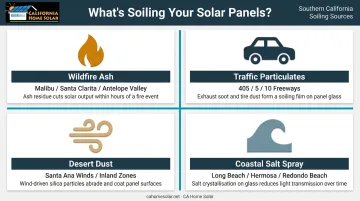
- Wildfire ash from Malibu, Santa Clarita, and Antelope Valley fire corridors — ash is particularly damaging because it bonds to glass
- Traffic particulates near the 405, 5, and 10 freeways
- Desert dust blown in from inland zones during Santa Ana wind events
- Coastal salt spray in Long Beach, Hermosa Beach, and Redondo Beach areas
Cleaning as Inspection
Given how much soiling Southern California panels accumulate, regular cleaning visits do more than restore output — they put trained eyes on equipment most homeowners never inspect up close. Debris buildup in corners, micro-cracks, new shading from tree growth, and bird nesting under panel edges — these issues are easy to miss from the ground but visible during a hands-on cleaning visit.
How Much Does Solar Panel Cleaning Cost?
Professional solar panel cleaning is priced two ways: per panel or as a flat rate. Costs vary by system size, roof complexity, and local labor rates.
Per-Panel Pricing
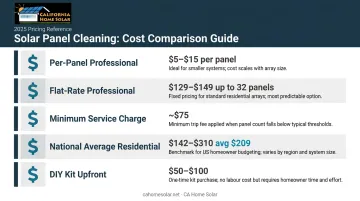
Most professional cleaners charge $5–$15 per panel, though rates as low as $3 and as high as $20 exist depending on location and conditions.
For a typical 20-panel residential system, that works out to $100–$300 per cleaning.
Flat-Rate Pricing
Some companies charge a flat fee covering up to a set number of panels — often up to 32 panels for $129–$149 — with a per-panel add-on for larger systems. Most services carry a minimum charge around $75, regardless of system size.
Thumbtack's national data puts the average residential cleaning job at $142–$310, with most homeowners paying around $209. That's a useful benchmark for Southern California homeowners comparing local quotes.
DIY Cost
DIY cleaning costs roughly $50–$100 upfront for a basic kit — squeegee, soft scrubber, telescoping pole, mild soap. An Unger scrubber/squeegee/pole kit at Home Depot runs around $46 before adding a hose and deionized water supply.
The upfront savings are real, but DIY comes with tradeoffs: roof safety risks and the possibility of voiding your panel warranty if improper tools or pressure are used. More on that in the DIY vs. professional section below.
Quick Cost Comparison
| Cleaning Method | Typical Cost | Notes |
|---|---|---|
| Per-panel (professional) | $5–$15/panel | Rates vary by location and roof complexity |
| Flat-rate (professional) | $129–$149 (up to 32 panels) | Add-on fees for larger systems |
| Minimum service charge | ~$75 | Applies regardless of system size |
| National average (residential) | $142–$310 | Most homeowners pay ~$209 (Thumbtack) |
| DIY kit (upfront) | $50–$100 | One-time cost; ongoing water/supply costs extra |
What Affects the Cost of Solar Panel Cleaning?
No two cleaning jobs are priced identically. The main variables:
- More panels mean more time and materials, raising the base cost
- Steep or high roofs require additional safety equipment and labor time
- Heavy soiling (ash deposits, caked bird droppings) takes longer to clear than routine dust
- Ground-mounted systems are generally faster and cheaper to service than roof-mounted arrays
- Labor rates in urban LA areas typically run higher than in surrounding communities
The Hard Water Factor
This one catches many LA homeowners off guard. LADWP data shows water hardness averaging 8.6 grains per gallon in the San Fernando Valley and Western LA — climbing to 9.8 grains/gal in Silver Lake and Downtown, and 16.3 grains/gal in Eastern LA and Harbor areas. Anything over 7 grains/gal is considered hard.
Using untreated tap water to clean panels leaves calcium and mineral deposits on the glass that are difficult to remove — and reduce output just like dirt does. Panel manufacturers including LG, SunPower, and REC Group specifically recommend deionized or demineralized water for this reason.
CA Home Solar uses deionized water as standard — a practical necessity given the mineral-heavy tap water across most of their LA service area.
Getting Accurate Quotes
Understanding these cost variables — including the water quality factor — makes it easier to evaluate what you're actually paying for. Before booking, ask every provider:
- Is there a minimum service charge?
- Are mobilization or travel fees included?
- Does the price include deionized water equipment, or is that extra?
- What's the surcharge, if any, for steep or complex roofs?
Getting two to three quotes is worth the effort — pricing in this market varies more than most homeowners expect.
How Often Should You Clean Solar Panels in Southern California?
The standard industry recommendation is one to two cleanings per year. In Southern California, lean toward two — and in some locations, consider even more.
Why Southern California Needs More Frequent Cleaning
The region's low annual rainfall means panels don't benefit from natural rinsing the way they would in wetter climates. Research on solar modules in dry climates shows that flat panels (0° tilt) can accumulate twice the soiling losses of steeply angled ones over just three months. Flat rooftop systems across the LA basin are especially vulnerable to this buildup.
Clean more often if your home is:
| Location Type | Examples | Why It Matters |
|---|---|---|
| Near major freeways | 405, 5, 10 corridors | Traffic particulate accumulation |
| Wildfire-prone zone | Malibu, Santa Clarita, Antelope Valley | Ash bonds to glass |
| Coastal area | Hermosa Beach, Long Beach, Redondo Beach | Salt spray residue |
| High-dust inland | Palmdale, Lancaster, San Fernando Valley | Desert dust and Santa Ana winds |
For most homeowners in these areas, twice a year is a practical minimum. That said, after a major wildfire event or an extended Santa Ana wind period, go ahead and schedule an additional cleaning — don't wait for your next routine visit.
How to Clean Solar Panels: DIY vs. Hiring a Professional
DIY cleaning costs less upfront and works well for ground-mounted or single-story systems. Roof-mounted panels are a different story — fall risk is real, and the wrong technique or materials can cause lasting damage.
DIY Solar Panel Cleaning: Steps and What to Avoid
Check your panel manufacturer's cleaning guidelines before starting. Some warranties specify approved methods, and using the wrong approach can void coverage.
Basic DIY process:
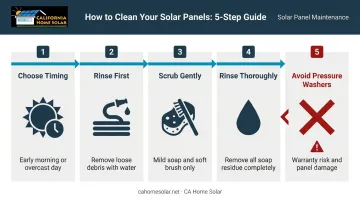
- Choose your timing carefully — Clean early morning or on an overcast day. Hot panels hit with cold water can stress the glass and, in some cases, crack it.
- Rinse first — Use a garden hose at normal household pressure to remove loose dust and debris.
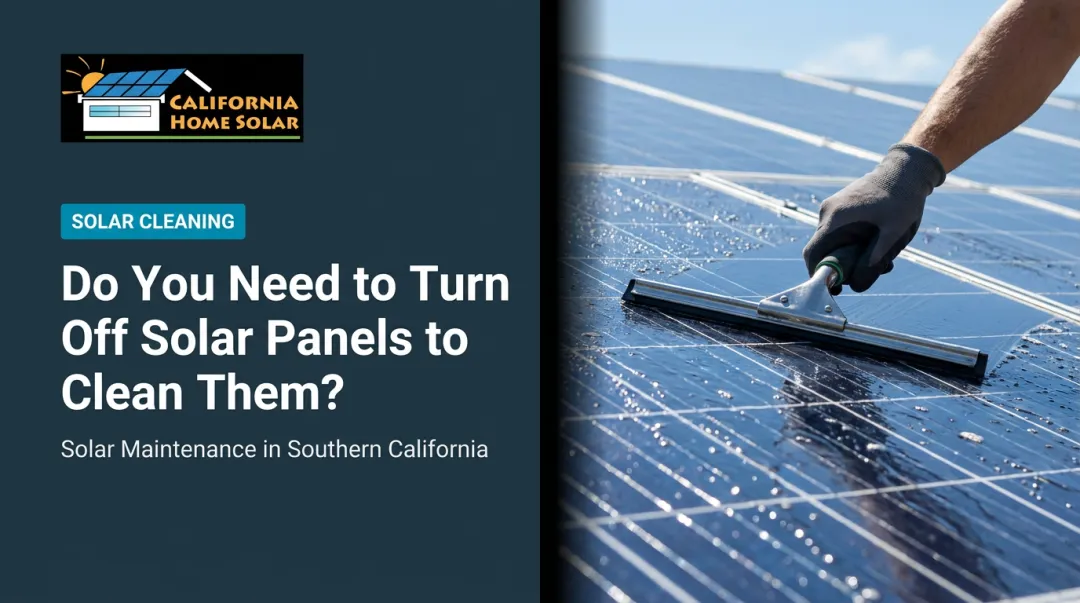
- Scrub gently — Apply mild, non-abrasive soap with a soft sponge or squeegee on an extension pole. Avoid anything metallic or abrasive.
- Rinse thoroughly — Remove all soap residue. Leftover soap attracts more dirt.
- Skip the pressure washer — REC Group explicitly states that pressure cleaners, steam cleaners, and high-pressure hoses will invalidate the product warranty. The force can break the panel frame's seal and allow water intrusion.
Hard water warning for LA homeowners: Using untreated tap water in high-hardness areas like Eastern LA or the Harbor district will leave mineral spots. Use filtered or deionized water wherever possible — or hire a professional who supplies it.
Hiring a Professional Cleaning Service: What to Look For
If DIY isn't the right fit — whether due to roof height, hard water buildup, or warranty concerns — a qualified professional handles all of it. Look for:
- Experience specifically with solar panels (window washers aren't the same)
- Verified liability insurance and workers' compensation coverage — California law requires contractors to carry workers' comp even with a single employee; verify license status through the CSLB's online lookup tool
- Non-abrasive brushes and panel-safe cleaning solutions
- Deionized or properly filtered water equipment
If you're not sure where to start, checking with your original solar installer is a good starting point. CA Home Solar — which has served the LA area for 36 years and offers standalone cleaning services for both residential and commercial systems — uses soft brushes, biodegradable cleaning solutions, and deionized water as part of their standard process. They also conduct an initial assessment and post-cleaning performance check to confirm output improvement.
When hiring a pro is the clear choice:
- Two-story or steeply pitched roofs (fall risk is real — CDPH documented a California solar panel cleaner fatality from a 20-foot residential roof fall in 2024)
- Hard water concerns requiring deionized equipment
- Heavy ash or grime buildup after wildfire events
- When warranty compliance requires documented professional cleaning
Frequently Asked Questions
How much would it cost to have my solar panels cleaned?
Professional cleaning typically runs $5–$15 per panel, or $100–$310 for a full residential system as a flat rate. The national average runs $150–$209 depending on location, system size, and roof complexity. Most companies charge a minimum of around $75.
How often should I clean my solar panels in Southern California?
One to two times per year is the standard recommendation. Southern California homeowners — especially those near freeways, coastlines, or wildfire corridors — should aim for twice yearly given the region's dry climate and higher accumulation of dust, ash, and salt residue.
Can I clean my solar panels myself?
For ground-mounted or single-story rooftop systems, yes. Use a soft sponge, mild soap, and a garden hose on a cool morning. Avoid pressure washers, hard tap water, and abrasive materials — and check your panel manufacturer's guidelines before starting.
Does cleaning solar panels really improve efficiency?
Dust, ash, and soiling block sunlight and reduce power output measurably. Regular cleaning restores output closer to the panel's rated capacity, meaning your system generates more electricity and your utility bill reflects it.
What happens if I never clean my solar panels?
Accumulated dirt, pollen, ash, and bird droppings reduce power output over time. In Southern California's dry climate, that degradation compounds without rain to help clear it — potentially costing hundreds of dollars in lost generation annually and reducing effective panel lifespan.
Should I use a pressure washer to clean solar panels?
No. High water pressure can crack the glass surface, break the panel frame seal, and void the manufacturer's warranty. A garden hose at normal household pressure with a soft brush is the right approach — and it's what professional services use too.