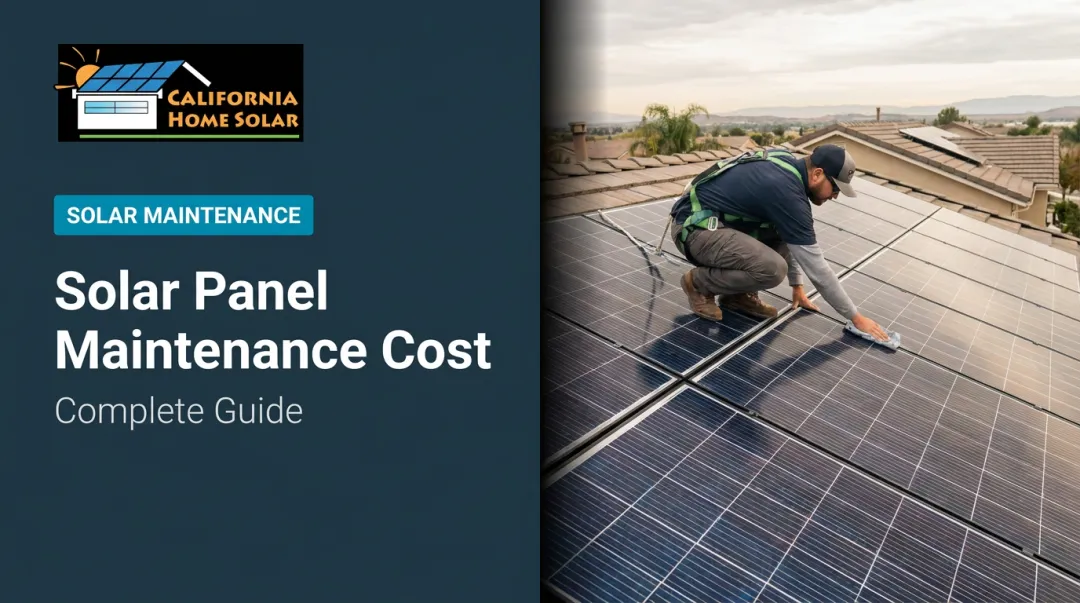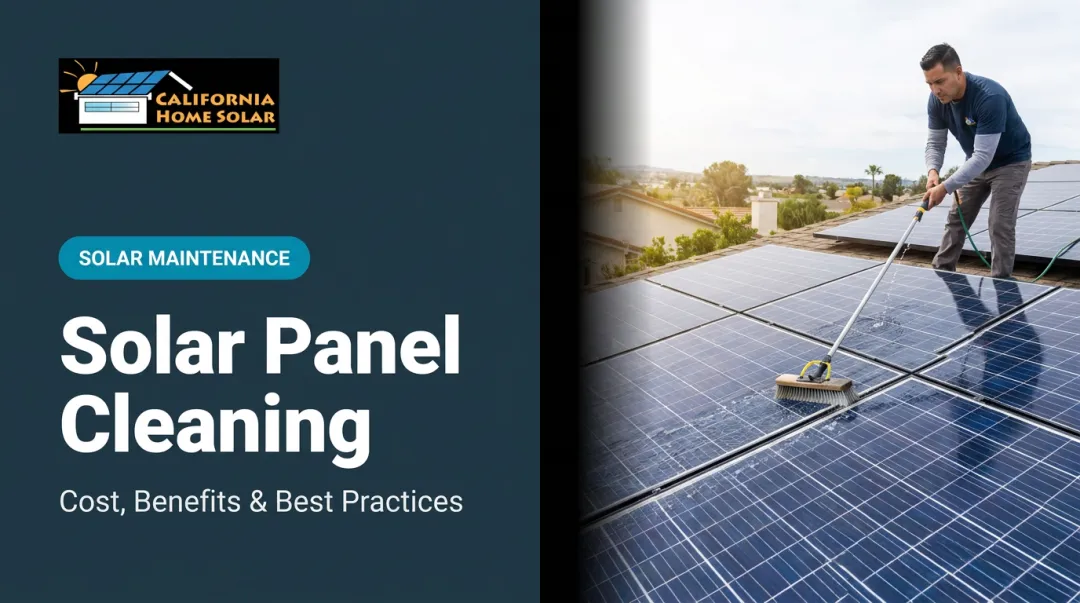
The price range for professional cleaning is wider than most people expect. Factors like panel count, roof pitch, location, and service frequency all shift the number significantly. Misreading that range leads to one of two mistakes: skipping maintenance entirely, or overpaying for a service that doesn't match what your system actually needs.
This guide breaks down what professional solar panel cleaning costs across different system sizes, what drives prices up or down, what a quality service visit actually includes, and how to decide between DIY and professional cleaning.
Key Takeaways
- Professional residential cleaning typically runs $150–$350 for most systems, with complex or large arrays pushing higher
- Price depends on panel count, roof pitch, location, and how often you schedule service
- DIY cleaning carries real risks: voided warranties, safety hazards, and missed damage
- Southern California's wildfire ash, coastal salt air, and desert dust accelerate soiling faster than most climates
- Recurring service plans lower the per-visit cost and protect long-term output — one-time cleans cost noticeably more
How Much Does Solar Panel Cleaning Cost?
There's no single flat rate for solar panel cleaning — and any company quoting you a price before assessing your system is worth questioning. A homeowner in Palmdale with a dusty flat-roof array will pay differently than someone in Hermosa Beach with a steep coastal rooftop and salt air buildup.
Still, the market has clear pricing tiers — and knowing them gives you a reliable benchmark before you call anyone.
Basic / Entry-Level Cleaning ($100–$150)
This tier covers smaller residential systems — typically 10–15 panels on ground-level or low-pitch roofs in relatively clean environments. The service is usually a straightforward water-and-brush clean with no inspection component. Good for newer installations in areas without heavy pollution, ash, or coastal salt.
Standard Professional Cleaning ($150–$350)
This is where most Southern California homeowners land. According to EnergySage, professional solar panel cleaning typically costs $150 to $350, which aligns with Thumbtack's national average of $142–$310. This range covers:
- 15–30 panels on a moderately pitched roof
- Surface rinse, soft-brush cleaning, and a basic visual check
- Post-clean spot inspection
Not usually included at this price: deep stain removal, panel performance testing, or repairs to mounting hardware.
Large Systems or Difficult Access ($300+)
Systems with 30+ panels, steep or multi-story roofs, or locations requiring specialized equipment fall into this tier. Angi's 2026 data puts large systems (10 kW+, 30+ panels) at $450–$750+ for full maintenance. Remote or coastal properties — Malibu, Palos Verdes, Rolling Hills — may also carry travel surcharges from service providers.
Per-panel rates generally run $8–$35 per panel depending on the provider and region. California examples from Thumbtack show $5–$10 per panel for standard setups and $8 per panel for second-story homes.
Key Factors That Affect Solar Panel Cleaning Costs
Several predictable factors shape what you'll pay for solar panel cleaning. Knowing them helps you evaluate quotes accurately.
Number of Panels and System Size
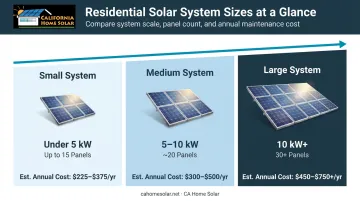
More panels mean more time and materials. A 10-panel system and a 30-panel system won't cost the same even if the per-panel rate is identical. Angi's 2026 data shows the progression clearly:
| System Size | Panels | Estimated Annual Maintenance Cost |
|---|---|---|
| Small (<5 kW) | Up to 15 | $225–$375 |
| Medium (5–10 kW) | ~20 | $300–$500 |
| Large (10 kW+) | 30+ | $450–$750+ |
Roof Pitch and Accessibility
- Flat roofs — debris settles differently and may concentrate in spots
- Moderate pitch — standard residential rate, most common in SoCal
- Steep roofs — require harnesses and safety equipment, adding time and cost
- Ground-mounted systems — cheapest to clean because there's no roof access risk
Companies factor this in because steeper roofs take longer and carry higher liability for the cleaning crew.
Location and Local Environmental Conditions
Southern California is harder on solar panels than most of the country. Three distinct soiling environments affect panels differently:
- Wildfire ash (Santa Clarita, Antelope Valley, LA County) — ash coats panels in fine particulate that bonds to the glass
- Coastal salt air (Malibu, Hermosa Beach, Manhattan Beach, Redondo Beach) — salt deposits build up and etch into the surface without regular removal
- Desert dust (Palmdale, Lancaster) — fine particulate matter that accumulates quickly in dry, low-rain conditions
NREL's soiling research specifically notes that Los Angeles fine urban particles can be stickier than desert dust and may require different cleaning treatments than standard dust removal.
Frequency of Service
One-time cleans cost the most per visit. Annual or bi-annual service agreements lower the per-visit rate and keep panels performing consistently. Southern California systems run year-round at high output, which makes regular cleaning more cost-effective here than in cloudier regions. In those areas, seasonal downtime masks some of the efficiency loss — here, it doesn't.
Cleaning Method Used
- Soft-brush + deionized water — the residential standard; deionized water prevents mineral deposits from tap water
- Water-fed poles — extends reach on taller installations without ladder risk
- Robotic/automated systems — more common on large commercial arrays, rarely used for residential
Multiple manufacturer guidelines — including LONGi and JinkoSolar — specify that minerals in standard tap water can deposit on panel glass and reduce output over time, which is why deionized water is worth the slight price premium.
What's Included in a Professional Solar Panel Cleaning Service
Not all cleaning services are equal. General window-washing crews and solar-trained technicians use different tools, techniques, and chemicals — and the difference shows up in both results and warranty status.
A quality professional visit should include:
- Pre-cleaning inspection — check for visible damage, cracked glass, or debris buildup in specific spots
- Soft-brush or deionized-water surface wash — no pressure cleaners (REC, JinkoSolar, and LONGi all specify that high-pressure washing can void warranties)
- Post-cleaning rinse and spot check — verify no streaking or residue
- Output/condition report — confirmation that the cleaning has improved panel performance
California Home Solar follows this structure for every cleaning job — deionized water, biodegradable solutions, and a post-service performance check — backed by 36 years serving Southern California homeowners. They offer a free estimate before any commitment, so you get an accurate scope upfront.
Before booking any service, confirm:
- Does the crew carry liability insurance?
- Do they have solar-specific experience (not just general window washing)?
- Will they provide a written quote before starting?
These questions matter because the wrong cleaning approach (wrong chemicals, pressure washing, abrasive tools) can void manufacturer warranties and damage panel glass.
DIY vs. Professional Solar Panel Cleaning: Real Cost Comparison
DIY cleaning has real costs — most homeowners just don't see them until something goes wrong.
The True Cost of DIY
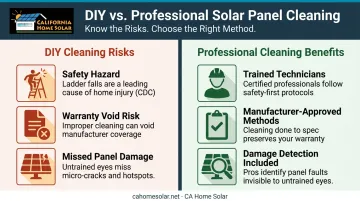
A proper cleaning kit — soft brush, squeegee, deionized water filter, extension pole — runs roughly $30–$250 according to Angi's 2026 data. That's manageable. The harder costs are:
- Safety risk — CDC/NIOSH data shows ladders were involved in 161 workplace fatalities and 22,710 injuries in 2020 alone
- Warranty risk — using the wrong cleaning agents or a pressure washer can void manufacturer warranties (REC explicitly prohibits pressure cleaners; JinkoSolar bans chemical cleaning agents)
- Missed damage — a trained technician will spot early signs of cracked glass, loose mounting hardware, or wiring issues that a homeowner doing a DIY clean will likely miss
The Financial ROI of Professional Cleaning
Dirty panels lose meaningful output. NREL research documents up to 7% annual energy loss from soiling in parts of the US — and that's a conservative figure for Southern California's high-dust, high-pollution environments.
Consider the math: a system producing $1,500/year in energy value that loses 10–15% output to soiling is losing $150–$225 annually. A professional cleaning visit at $150–$250 pays for itself within the year, especially if panels haven't been cleaned in 12+ months.
When DIY Makes Sense vs. When to Hire a Pro
DIY is reasonable when:
- The system is ground-mounted or on a single-story low-pitch roof
- You already own appropriate safety equipment
- Panels were cleaned within the last 6 months and the local environment has low dust or pollution
Hire a professional when:
- Panels are on a rooftop, especially multi-story
- There's visible ash, bird droppings, or salt buildup
- The system hasn't been cleaned in 12+ months
- You're unsure which cleaning agents your panel manufacturer allows — warranty terms vary significantly by brand
One-Time vs. Recurring Service Plans
Many providers offer annual or bi-annual plans at a lower per-visit rate than one-time cleans. For Southern California homeowners with year-round solar production, a recurring plan typically delivers better cost-per-panel economics.
It also means the system gets a visual inspection twice a year — useful for catching cracked glass, degraded seals, or loose hardware before a small problem turns into a costly repair.
What Most Homeowners Get Wrong About Solar Panel Cleaning Costs
The most common and costly mistake is treating cleaning as optional or cosmetic. In Southern California's climate — high solar irradiance, wildfire seasons, coastal pollution, and minimal winter rainfall — skipping cleaning translates directly into lost savings on your monthly bill.
Light rain doesn't remove the oily residue from smog, bird droppings, or ash particulates that coat panels in this region. NREL research notes that rain and wind may not remove "cemented dust" caused by morning dew, and that Los Angeles fine particles require different treatment than standard dust.
Hard water and tap water runoff can actually worsen mineral deposits over time — meaning regular rainfall may create new problems rather than solve existing ones.
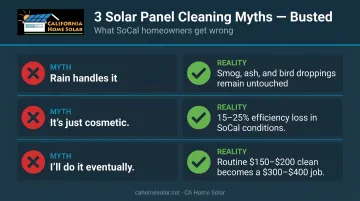
Three misconceptions tend to cost homeowners the most:
- "Rain handles it" — Light rain leaves smog residue, bird droppings, and ash deposits untouched
- "It's just cosmetic" — Soiling reduces output; in SoCal conditions, efficiency losses commonly run 15–25%
- "I'll do it eventually" — Panels that go 18–24 months in dusty areas like Palmdale or Antelope Valley develop bonded buildup; a routine $150–$200 clean can become a $300–$400 job
Angi and CNET both recommend cleaning at least once or twice per year for this reason.
The math is straightforward: one skipped cleaning rarely saves money when you account for both the steeper removal cost later and the production losses in the months between.
Frequently Asked Questions
How much does it cost to clean solar panels?
Most residential systems run $150–$350 for a professional cleaning visit. Price varies based on panel count, roof accessibility, and location — smaller systems on easy-access roofs land toward the lower end, while larger or harder-to-reach arrays push higher.
How often should solar panels be cleaned and serviced?
Most homes benefit from 1–2 cleanings per year. Southern California homeowners in dusty inland areas (Palmdale, Lancaster, Antelope Valley) or coastal zones (Malibu, Hermosa Beach) may need more frequent service due to ash, smog accumulation, and salt deposits.
Is it worth hiring a solar panel cleaning service?
For most active systems, yes. A professional clean costs $150–$350 and can recover meaningful output losses from soiling. NREL documents up to 7% annual efficiency loss from accumulated particulates in US climates, with steeper losses in heavily polluted or dusty environments.
Can I clean my solar panels myself?
DIY is possible for ground-mounted or low-pitch single-story systems if you have the right equipment. On rooftop systems, the safety and warranty risks outweigh the savings. Using the wrong cleaning solution or a pressure washer can void your panel manufacturer's warranty.
Does cleaning solar panels really make a difference?
Yes. Dirty panels lose measurable output — the amount depends on soiling type and accumulation. In Southern California's high-dust, high-pollution environment, regular cleaning is one of the most direct ways to protect panel efficiency and your monthly energy savings.
What happens if you don't clean your solar panels?
Accumulated dirt, ash, bird droppings, and salt deposits reduce energy output over time. Extended gaps let buildup bond more firmly to the glass, requiring more intensive cleaning to reverse. Left too long, it can also cause permanent micro-scratching if handled incorrectly.