Asphalt shingle roofs last about 20 years, according to the NAHB. Meanwhile, the DOE reports that the average solar panel lifespan has increased to 25–35 years. That gap — roughly 5–15 years — is where this cost lives. It's a predictable expense that catches most homeowners off guard anyway.
The total price for solar panel removal and reinstallation varies depending on system size, roof complexity, contractor choice, and whether you coordinate both projects at the same time. Getting those variables right can mean the difference between a manageable cost and a budget-breaking one.
This article breaks down realistic price ranges for Southern California homeowners, the factors that push costs up or down, and the one timing decision that can save you thousands.
Key Takeaways
- Removal and reinstallation typically runs $200–$300 per panel, or $1,500–$6,000+ for a full residential system
- Costs increase with larger systems, steep roofs, older hardware, and poor project coordination
- Bundling solar removal with a roof replacement eliminates a second mobilization fee, saving hundreds upfront
- Always use a licensed solar contractor for disconnection and reconnection — not a roofer
- Panels, racking, and most hardware are usually reusable if undamaged
How Much Does It Cost to Remove and Reinstall Solar Panels?
There's no fixed price for this service — total cost depends on panel count, roof complexity, which contractor you hire, and whether storage is needed between removal and reinstallation.
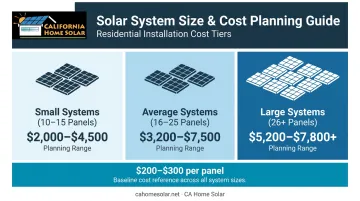
According to EnergySage, homeowners can expect to pay $1,500–$6,000 for solar panel removal and reinstallation, roughly $200–$300 per panel, with some projects exceeding $7,000. These are consumer-market estimates, not regulated rates — actual LA-area quotes may differ.
Two planning gaps regularly catch homeowners off guard:
- Assuming removal is cheap because the panels are "already installed"
- Forgetting to account for lost energy production while the system is offline
Here's how those per-panel figures translate by system size:
Small Systems (10–15 Panels)
Planning range: roughly $2,000–$4,500
This tier covers smaller homes, lower-energy households, or partial-roof arrays. At $200–$300 per panel, a 10-panel system sits near the low end; a 15-panel system approaches $4,500. Expect the quote to include labor for removal and reinstallation, basic hardware handling, and recommissioning — but confirm what's actually covered in writing.
Average Systems (16–25 Panels)
Planning range: roughly $3,200–$7,500
This is where most LA-area homeowners land. A 20-panel system at $250 per panel runs about $5,000. Mobilization, electrical shutdown, and recommissioning costs are largely fixed regardless of panel count, so the per-panel rate is typically lower at this size.
Larger Systems (26+ Panels)
Planning range: $5,200–$7,800+ for 26 panels, higher beyond that
High-energy-usage homes and some commercial-adjacent residential properties fall here. At this scale, mobilization minimums, extended electrical work, and the sheer volume of hardware removal add up fast.
What these ranges typically include:
- System shutdown and electrical disconnection
- Physical panel and racking removal
- Labor for reinstallation
- System recommissioning and utility reconnection coordination
What they typically exclude:
- The roof replacement itself
- Panel cleaning
- Replacement hardware if existing mounts are corroded
- Permits and city inspection fees
- Storage fees if there's a gap between removal and reinstallation
Key Factors That Affect the Cost
The per-panel figure is a starting point. These variables can push your total significantly higher or hold it near the minimum.
Number of Panels and System Size
Panel count is the single biggest cost driver. Most contractors price per panel, but they also charge a minimum service fee that applies even for a single-panel job. That means a 2-panel removal can cost nearly as much as a 6-panel removal once mobilization is factored in.
Roof Type, Pitch, and Complexity
Steep pitches are common on older LA homes, and they require safety rigging that drives up labor time. Multi-face roof designs mean more repositioning. Tile or slate roofing requires more careful handling than standard asphalt during both panel removal and the roof work itself.
No authoritative source publishes a standardized pitch premium — contractors price this individually. When getting quotes, ask specifically whether your roof's pitch or material affects the rate.
Age and Condition of Existing Hardware
Mounting hardware exposed to Southern California heat for 10–15 years doesn't always cooperate. Lag bolts corrode, flashing bonds to the roof, and older racking systems may not be compatible with a new roof material. A straightforward removal can turn into a careful extraction job when hardware is fused to the deck beneath.
If your system is older and you're switching roof materials (say, from tile to composition shingle), budget for replacement mounting hardware.
Contractor Type and Location
Licensed solar contractors (C-10 Electrical or C-46 Solar under California's CSLB classifications) cost more than general roofers. They're also the only contractors legally authorized to disconnect and reconnect a grid-tied system. Using an unlicensed contractor risks:
- Permit failures on inspection
- Voided manufacturer or workmanship warranties
- A utility that refuses to reconnect your system
Southern California labor rates run above the national average. BLS data shows California solar PV installers earn a mean hourly wage of around $30.90, compared to the national mean of $28.87 — and those are installer wages, not what contractors bill out. Your quoted labor rate will be higher.
Time Between Removal and Reinstallation
Every day your system is offline is a day of lost production. The actual dollar figure depends on your system size, utility rate, and typical usage. Run your numbers through NREL's PVWatts calculator for a project-specific estimate.
If there's a scheduling gap between roof completion and reinstallation, some contractors charge for panel storage. Ask upfront whether storage is on-site, off-site, insured, and whether there's a time cap.
What the Solar Panel Removal and Reinstallation Process Looks Like
Understanding the steps helps you evaluate quotes and recognize when a contractor is cutting corners.
Step-by-Step Overview
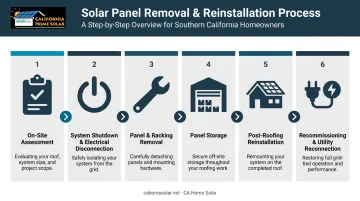
- On-site assessment and scheduling coordination — The solar contractor reviews the system and aligns timing with the roofing crew. Both trades need to be sequenced so neither crew is waiting on the other.
- System shutdown and electrical disconnection — The system is shut down at the inverter and disconnected from the utility grid. Grid-tied systems require coordination with LADWP or SCE before work begins.
- Panel and racking removal — Panels come off first, then racking. Roof penetrations are sealed immediately to keep water out during the roofing work.
- Panel storage — Panels should be stored indoors where possible — a garage or secure facility. Outdoor storage increases damage risk during roofing work.
- Post-roofing reinstallation — Once the new roof is complete and inspected, racking goes back up, panels are rehung, and wiring is reconnected.
- Recommissioning and utility reconnection — The system is tested, inspected, and reconnected to the grid. LADWP charges a $130 interconnection expenditure recovery fee at submittal for every PV project.
Can You Reuse the Same Equipment?
In most cases, yes:
- Panels — Reusable if undamaged; handle carefully during removal
- Racking and mounting hardware — Usually reusable unless corroded or incompatible with the new roof material
- Microinverters and optimizers — Generally reusable if functioning
- Wiring and conduit — Reusable unless there's critter damage or deterioration
- Lag bolts and flashing — Often need replacement, especially on systems 10+ years old
That said, reusing equipment safely depends on proper handling throughout the process — which is exactly why DIY removal isn't a good idea.
Why DIY Is Not Recommended
- Electrical hazard — Solar panels generate power even on overcast days. Without proper shutdown procedures, there is live voltage present throughout the removal process.
- Warranty voiding — Most panel and equipment manufacturers void warranties if removal is performed by uncertified technicians.
- Permit violations — Homeowners cannot pull electrical permits for grid-tied solar disconnection in California. State law requires a licensed electrical contractor, and unpermitted work can create problems when you sell the home.
Should You Combine Your Roof Replacement and Solar Panel Project?
This is the decision with the most financial impact — and the one most homeowners don't think about until they're already committed to one project.
The Financial Case for Bundling
When you separate these projects, you pay two mobilization fees, go through two permit processes, and schedule two sets of contractors. More importantly, if your roof is aging, doing the removal now and paying for it again in 3–5 years is avoidable.
The avoided cost is the removal and reinstallation itself — $1,500–$6,000 or more, per EnergySage's benchmark. No regulatory body publishes a "bundling discount," but skipping a second mobilization is a real, quantifiable saving.
When Your Roof Should Come First
Replace your roof before reinstalling panels if:
- Your asphalt shingle roof is 10–15+ years old
- You're seeing curling, granule loss, or repeated leak repairs
- Your roof has fewer than 7–10 years of estimated life remaining
Putting a 25-year solar system on a roof with 5 years of life left guarantees a future removal expense. The NAHB's ~20-year asphalt shingle lifespan is a planning guide, not a guarantee — local weather, installation quality, and maintenance all affect when you'll actually need to replace.
When Separate Projects Make Sense
- Roof is less than 5–7 years old and in good condition
- You need panel removal for a targeted repair, not a full replacement
- Damage is covered by insurance (storm, hail, fire) — in that case, the insurance scope may dictate the timeline
Working With a Contractor Who Does Both
When two separate companies share a job site, coordination gaps are inevitable. If the roof is damaged during panel removal, accountability between a roofer and a solar contractor is unclear. Warranty coverage can fall into the same gray area.
California Home Solar, based in Sherman Oaks and serving Southern California for 36 years, handles both solar and roofing as integrated services. Their roofing work is specifically designed to coordinate with solar installations — including solar-ready structural modifications and proper roof preparation before panels go back up. One contractor managing both scopes eliminates the handoff problems that come with splitting the job.
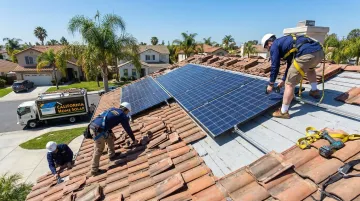
For Southern California homeowners facing a combined roof and solar project, that coordination is worth factoring into your contractor selection.
Hidden Costs That Catch Homeowners Off Guard
The per-panel removal quote is only part of what you'll actually pay. Several line items regularly blindside homeowners:
Permit fees — Permit costs are city-specific, not county-wide. Pasadena's electrical permit schedule includes a $62 issuance fee plus a 3% Records System Charge. Santa Monica charges a $25 SolarAPP+ administrative fee in addition to city permit fees. Los Angeles and Long Beach have separate fee structures. Don't assume permit costs are included in contractor quotes — ask for a line-item breakdown.
Utility fees — LADWP charges a $130 interconnection expenditure recovery fee at submittal for PV projects. Single-phase systems 30 kW and under don't pay beyond that; three-phase systems add $365. If corrections require more than two site visits, there's a $100 return-trip fee.
Storage costs if there's a scheduling gap — If roofing work takes longer than expected, panels sitting in storage may incur additional fees. Ask whether storage is included, how long it's covered, and whether it's insured.
Re-inspection and recommissioning delays — Roofers who offer to "handle the panels" often cannot legally pull electrical permits in California. A failed inspection adds return-trip fees, delays recommissioning, and can void manufacturer warranties. CSLB's C-10 (Electrical) and C-46 (Solar) licenses are required for this work — verify before signing.
Skipping a panel condition assessment — NREL research shows a median degradation rate of 0.5% per year, so a 12-year-old system may already be running 6% below rated capacity. Reinstallation is the right moment to decide whether upgrading panels outweighs the cost of putting aging equipment back on a new roof.
Frequently Asked Questions
How much does it cost to remove and reinstall solar panels during a roof replacement?
Expect to pay $200–$300 per panel, or $1,500–$6,000 for a full residential system in Southern California, with larger or more complex systems exceeding $7,000. Request a line-item quote that breaks out shutdown, hardware removal, storage, reinstallation, and recommissioning so you can compare contractors accurately.
What are the 20%, 25%, and 33% rules for solar panels and roofing?
These are informal contractor rules of thumb — not formal codes — used to guide replacement timing. The most practical version: compare your roof's remaining life against your solar system's remaining life. If the roof has fewer years left than the panels, replace the roof first to avoid paying for removal twice.
Can a roofing contractor remove and reinstall my solar panels?
A roofer can physically move panels, but California law requires a licensed C-10 or C-46 contractor to disconnect and reconnect a grid-tied solar system. Using an unlicensed contractor for that work can result in failed inspections, delayed recommissioning, and voided manufacturer warranties.
How long will my solar system be offline during a roof replacement?
Removal takes roughly one day; roofing work typically runs 2–7 days for residential projects; reinstallation takes 1–2 days. Total downtime of 1–2 weeks is common. Tight scheduling coordination between your solar contractor and roofer keeps that window shorter.
Can I reuse my existing solar panels and mounting hardware after a roof replacement?
Panels, racking, microinverters, and wiring are typically reusable if undamaged. Lag bolts, flashing, and mounting hardware may need replacement — especially on older systems or when switching roof materials (tile to shingle, for example). A pre-reinstallation inspection will clarify what can be reused.
Does homeowner's insurance cover solar panel removal for a roof replacement?
Coverage depends on the cause. GEICO notes that permanently attached panels may fall under dwelling coverage when damage stems from a qualifying event — storm, hail, or fire — but elective replacement due to age is typically excluded. Get written confirmation from your insurer before assuming removal costs are part of a claim.